


Scotland, Wales and Northern Ireland are all increasing pressure for greater control over their own futures. For the first time, all three devolved governments of the United Kingdom are led by political forces seeking significant changes in their current relationship with London.
These movements did not emerge in 2026. They have existed for decades, and in some cases for generations. What has changed is that their political strength is rising at the same time, while more people are questioning whether London still offers a model attractive enough to justify leaving the final say in the hands of the central government.
Contents
Why is the independence debate heating up again?
What do Scotland, Wales and Northern Ireland want?
Why is the United Kingdom finding it harder to keep them?
Is this also about political ambition?
What do they gain by staying in the United Kingdom?
Who has the best chance of succeeding outside the United Kingdom?
What would the United Kingdom and England gain and lose?
If one succeeds, what happens to the other two?
Could this strengthen separatist movements around the world?
The hardest test begins after leaving
1. Why is the independence debate heating up again?
In Scotland, John Swinney is First Minister, the head of the Scottish Government, and leader of the SNP. The SNP is the Scottish National Party, a political force that seeks to make Scotland an independent country.
In Wales, Rhun ap Iorwerth is First Minister and leader of Plaid Cymru. Plaid Cymru is a Welsh nationalist party that seeks greater self determination and ultimately an independent Wales. The Senedd is the Welsh Parliament. After the May 2026 election, Plaid Cymru became the largest party and took control of the Welsh government for the first time.
In Northern Ireland, Michelle O’Neill is First Minister and a member of Sinn Fein. Sinn Fein is an Irish nationalist party active in both Northern Ireland and the Republic of Ireland. It does not seek an independent Northern Irish state. Its goal is for Northern Ireland to leave the United Kingdom and reunify with the Republic of Ireland.
Developments in September 2026 rapidly pushed the issue back into the spotlight. On September 9, 2026, British Prime Minister Andy Burnham sparked controversy in the House of Commons when he suggested that Scotland could eventually be treated in a way similar to Northern Ireland if public support became clear enough. Northern Ireland has a mechanism for a referendum under the Good Friday Agreement, while Scotland has no equivalent arrangement. The Prime Minister’s office later had to reiterate that London had not agreed to another Scottish independence referendum.
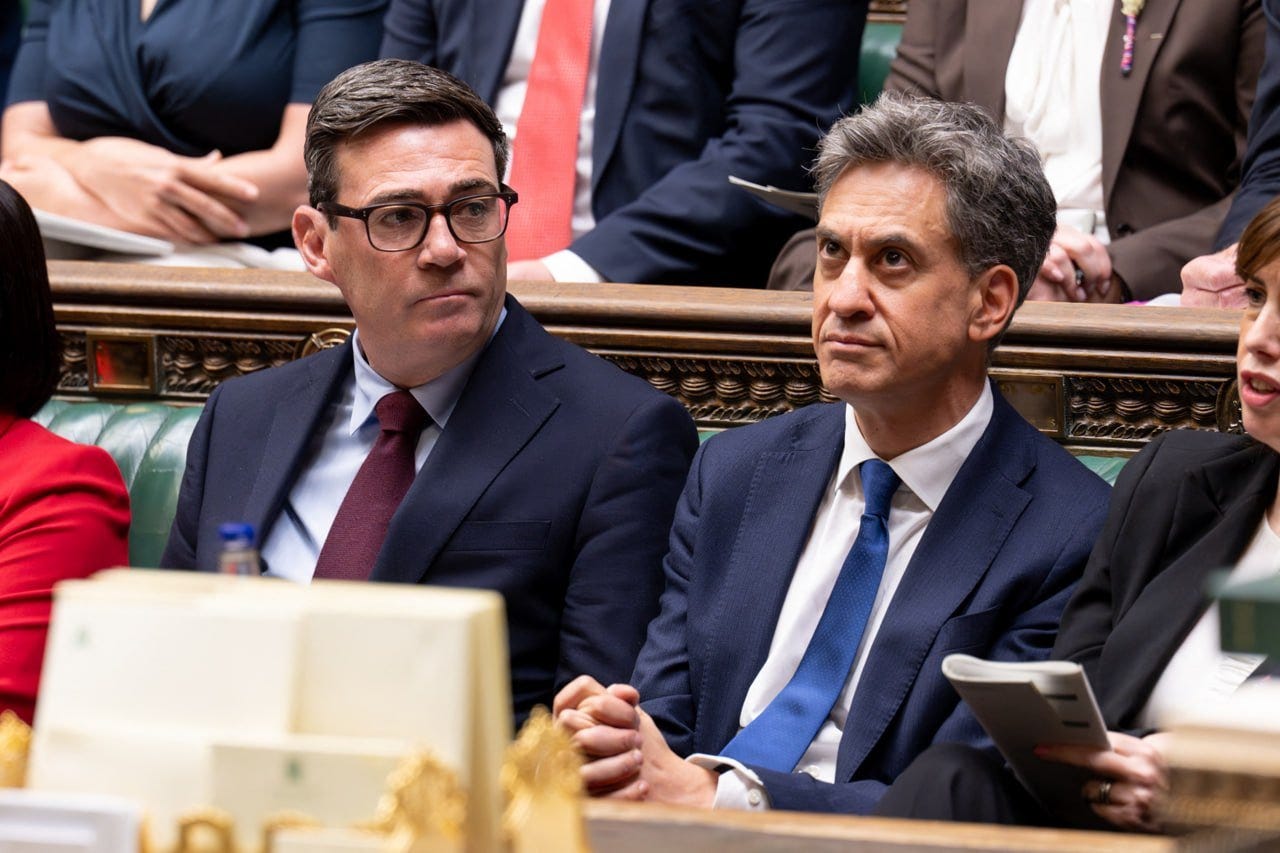
The SNP immediately used those remarks to increase the pressure. On September 10, 2026, John Swinney called on the British government to clarify the mechanism through which Scotland could hold a referendum once public support reached a sufficient level.
On September 12, 2026, Donald Trump pushed the issue onto the international stage when he said in Dublin that he would like to see a united Ireland. His remarks immediately drew criticism from political forces that want Northern Ireland to remain part of the United Kingdom.
On September 14, 2026, the leaders of Scotland, Wales and Northern Ireland are expected to meet in Cardiff to sign a joint declaration on self determination and cooperation in areas including the economy, energy, relations with Europe and constitutional issues. Three movements that developed separately are beginning to support one another politically.
2. What do Scotland, Wales and Northern Ireland want?
Scotland wants to become an independent country. Scotland was once a separate kingdom before its political union with England in 1707. In 2014, Scotland held an independence referendum. 44.7 percent voted to leave the United Kingdom, while 55.3 percent voted to remain.
Brexit gave the independence movement new momentum. A majority of Scottish voters chose to remain in the European Union in 2016, but Scotland still had to leave because the United Kingdom as a whole voted for Brexit. For the SNP, this demonstrated that Scotland could choose one direction and still ultimately be taken in another by the decision of the United Kingdom as a whole.
Wales has moved more slowly. For decades, Plaid Cymru focused heavily on Welsh identity, the Welsh language and greater autonomy. As the Senedd and the Welsh Government gained more powers, independence gradually became a more serious political option.
Northern Ireland has a completely different history. The debate there is not primarily about creating a new country. It is about whether Northern Ireland should remain in the United Kingdom or reunify with the Republic of Ireland. This debate has lasted for generations and was once at the heart of the conflict in Northern Ireland. The 1998 Good Friday Agreement moved the issue onto a democratic path.
3. Why is the United Kingdom finding it harder to keep them?
A union cannot survive indefinitely on history, law or the power of the central government alone. It must make its members feel that their lives are better inside it than outside it.
This is where London is struggling. Scotland, Wales and Northern Ireland still receive major benefits from the common market, public finances, the pound sterling and the United Kingdom’s defence system. But those advantages have not been enough to eliminate dissatisfaction over growth, public services, economic opportunities and political control.
When people do not believe the existing system is producing good enough results, the argument made by independence movements becomes easier to understand: If London cannot do better, let us do it ourselves.
Scotland wants greater control over its economy, immigration, energy and relationship with the European Union. Brexit strengthened the perception that Scotland’s political choices can still be overridden by decisions made across the United Kingdom as a whole.
In Wales, Plaid Cymru wants greater control over resources, public finances, justice and economic development. First Minister Rhun ap Iorwerth has also stressed that Wales should be treated as a nation with its own needs, not as a region of England.
Northern Ireland is different because national identity and the historical division of Ireland play a much larger role. But the same issue of political control also exists there: Sinn Fein does not want Northern Ireland’s future to remain dependent on decisions made in London.
England is by far the largest part of the United Kingdom in population, economic weight and political power. That gives London the foundation of a powerful state, but it also makes it easier for Scotland, Wales and Northern Ireland to feel that they live within a system in which they are not the main decision makers.
If they see themselves as distinct nations, why should their most important decisions still be made by a political centre outside them? This question has always been present within their independence movements.
4. Is this also about political ambition?
Yes.
If Scotland became independent, Edinburgh would go from being the seat of a devolved government to the capital of a sovereign state. The Scottish Government would control taxation, borders, immigration, foreign policy and defence. Wales would undergo a similar transformation if it became independent.
Local political elites therefore have an incentive to seek greater power. Once a government controls health and education, it may also want authority over taxation, then immigration, foreign policy and eventually full sovereignty.
But it would be too simplistic to treat this only as the ambition of politicians. The SNP, Plaid Cymru and Sinn Fein could not become major political forces without enough voters sharing their dissatisfaction or political objectives.
In Scotland and Wales, dissatisfaction with current outcomes, national identity and the ambition for self government all coexist. In Northern Ireland, the historical division of Ireland and national identity play a larger role.
5. What do they gain by staying in the United Kingdom?
Scale provides major advantages. Scotland, Wales and Northern Ireland are part of a single internal market, use the pound sterling, rely on the financial capacity of a large state, share a common defence system and benefit from London’s international influence.
Internal trade is especially important. Official figures show that sales to other parts of the United Kingdom are equivalent to at least 21.9 percent of Scotland’s GDP, 20.6 percent of Wales’s GDP and 24.1 percent of Northern Ireland’s GDP. For England, the figure is only around 3.1 percent.
The three also receive higher public spending per person than England. In the 2024 to 2025 financial year, public spending was GBP 13,134 per person in England, GBP 15,563 in Scotland, GBP 15,155 in Wales and GBP 16,116 in Northern Ireland.
Independence would give them greater control, but it would also require them to bear costs that are currently shared across the United Kingdom. More sovereignty also means paying for that sovereignty yourself.
6. Who has the best chance of succeeding outside the United Kingdom?

Scotland has the strongest foundation. It has North Sea oil and gas, renewable energy, financial services, the drinks industry, tourism and strong universities. In 2025, Scotland was a net exporter of 20.8 TWh of electricity to other areas, with an estimated value of around GBP 1.7 billion.
But public finances are a major weakness. In the 2025 to 2026 financial year, Scotland’s estimated fiscal deficit was GBP 25.3 billion, equivalent to 10.9 percent of GDP, compared with 4.2 percent for the United Kingdom as a whole. If Scotland became independent with its current spending and revenue structure, it would have to raise more revenue, cut spending or generate stronger economic growth.
Scotland has enough of a foundation to function as an independent country. Whether Scots would become richer after leaving is another matter.
Wales faces a harder calculation. Independence would give Cardiff greater control over taxation, energy, resources and economic development, but its economy is smaller and deeply integrated with England. Wales could gain political sovereignty before developing enough financial capacity to replace the benefits it currently receives from the wider system.
Northern Ireland has a completely different alternative. If Ireland reunified, Northern Ireland would not have to build a new state from scratch. It would join the Republic of Ireland and become fully part of the European Union. However, Northern Ireland’s economy remains heavily dependent on trade with the rest of the United Kingdom.
Scotland has the strongest foundation for standing on its own, Wales faces the greatest economic risk, while Northern Ireland has the clearest alternative because it can shift from London to Dublin.
7. What would the United Kingdom and England gain and lose?
If Scotland and Wales became independent while Northern Ireland reunified with the Republic of Ireland, the United Kingdom in its current form would effectively cease to exist. England would become the core of whatever state remained.
London could reduce some of the financial obligations associated with the other three nations. Public spending per person is currently higher in Scotland, Wales and Northern Ireland than in England. England is also less dependent on trade with the other three than they are on trade with England.
But the losses would be substantial. London would lose territory, population, natural resources, energy infrastructure, ports, maritime space and several strategically important military positions.
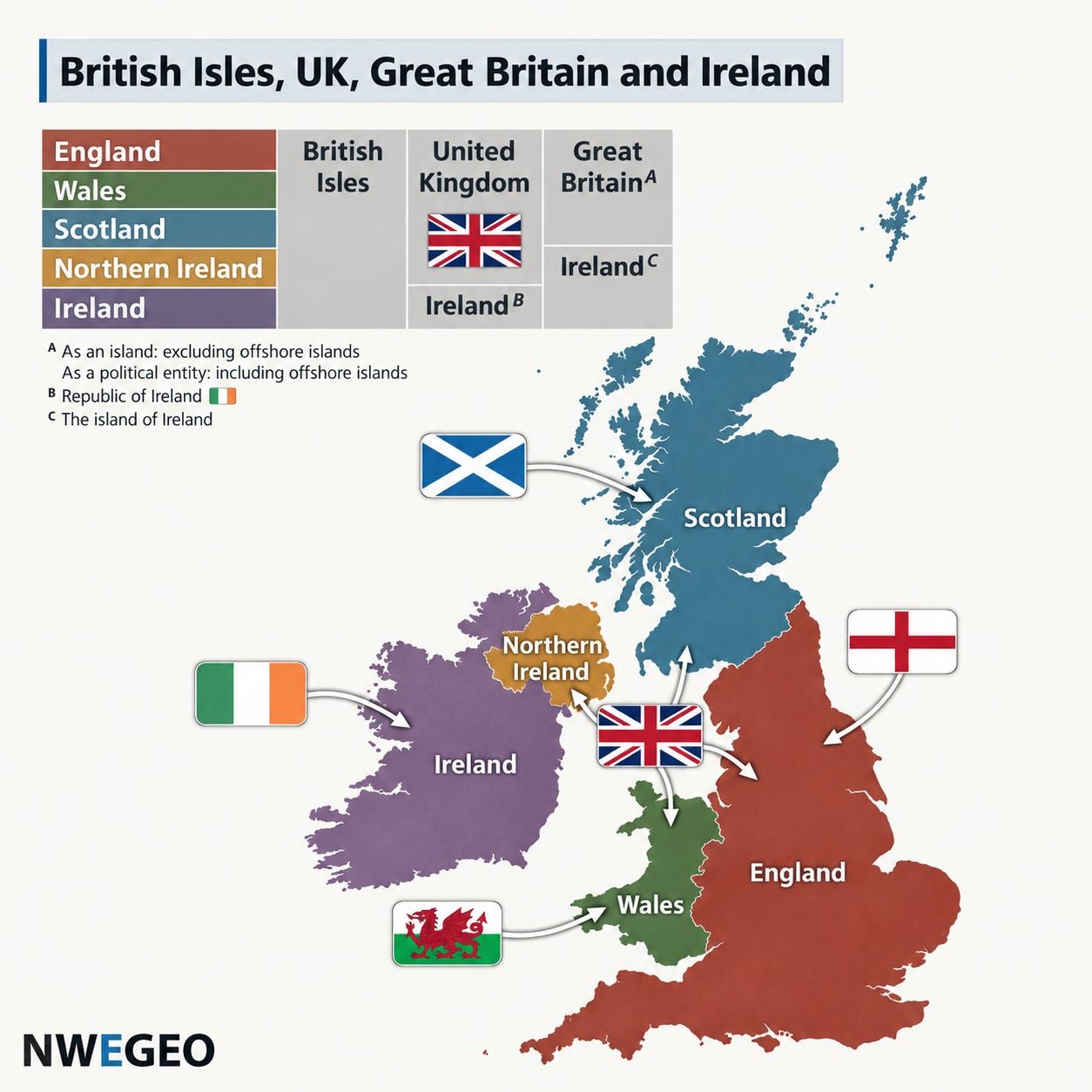
On the map, England would still have a long coastline and direct access to the North Sea, the English Channel, the Atlantic Ocean and the Irish Sea, but its maritime strategic depth would shrink considerably. Scotland opens onto the North Atlantic and the northern sea routes. Wales occupies a significant part of the western coastline of Great Britain. Northern Ireland provides an additional strategic position between the Irish Sea and the North Atlantic.
Scotland is also particularly important for energy and defence. The Faslane and Coulport bases currently play a central role in Britain’s nuclear submarine force. If an independent Scotland refused to allow London to continue using those facilities, the British government would need to reach a new agreement with Edinburgh or find an alternative location.
London would also lose part of its international weight. A state with less territory, a smaller population, fewer resources and reduced strategic capacity would find it harder to preserve the full level of influence currently enjoyed by the United Kingdom.
In return, England would have a simpler political structure, fewer disputes over devolution and a central government whose policies could more directly reflect the preferences of English voters.
London could reduce part of its financial burden, but the price would be a smaller territory, fewer resources, less strategic depth and diminished international weight.
8. If one succeeds, what happens to the other two?
If Scotland became independent and remained stable after several years, the argument that leaving the United Kingdom is simply too dangerous would become much weaker. Wales would have an immediate example next door showing that separation does not necessarily lead to collapse.
If Northern Ireland reunified with the Republic of Ireland and the transition went smoothly, the current structure of the United Kingdom would also lose its image of permanence.
The effect could also work in the opposite direction. If the first territory to leave suffered a fiscal crisis, lost investment or had to make severe cuts to public services, that outcome could weaken the remaining independence movements.
The first to leave would therefore influence more than its own future. Its success or failure would directly affect how attractive independence looks to the others.
9. Could this strengthen separatist movements around the world?
If Scotland left a union that has existed for more than three centuries through a democratic vote and then functioned successfully as an independent country, the impact would extend far beyond the United Kingdom.
Catalonia, Flanders, Corsica, Quebec and many other movements would not automatically gain new legal rights. Each has its own history and legal system. But they would gain a powerful example to point to: A community with a distinct identity can leave a developed democratic state through peaceful means.
Scotland would not even have to become independent for the effect to begin. If London increasingly accepted the principle that part of the United Kingdom could leave when a majority of its people wanted to, other separatist movements could cite that precedent.
If a case of separation ended in economic failure, the effect would reverse. Governments seeking to persuade voters to remain would use it as evidence that staying is safer.
The United Kingdom could become a major test case for separatist movements in the twenty first century.
10. The hardest test begins after leaving
Winning the right to leave only settles who has the power to decide. Currency, public finances, trade, borders, defence, welfare and relations with neighbouring countries still have to be dealt with afterward.
Scotland has the strongest foundation for taking the gamble. Wales may face the higher economic cost. Northern Ireland could join an existing state rather than build a new one. England would also have to accept that retaining more money and political control would come at the cost of territory, resources and strategic power.
In the end, the ability to preserve the United Kingdom still comes down to a simple calculation: London must convince people in Scotland, Wales and Northern Ireland that their lives are better inside the United Kingdom than they would be if they chose their own path.