


Why is Syria’s new government avoiding conflict?
Because Syria is still far from fully unified.
After Bashar al-Assad’s fall, President Ahmed al-Sharaa’s government regained control over most of the country. However, several areas remain outside Damascus’ authority, including the northeast, which is controlled by the Kurdish-led Syrian Democratic Forces (SDF). After more than a decade of civil war, Syria is also too weak to endure another major conflict.
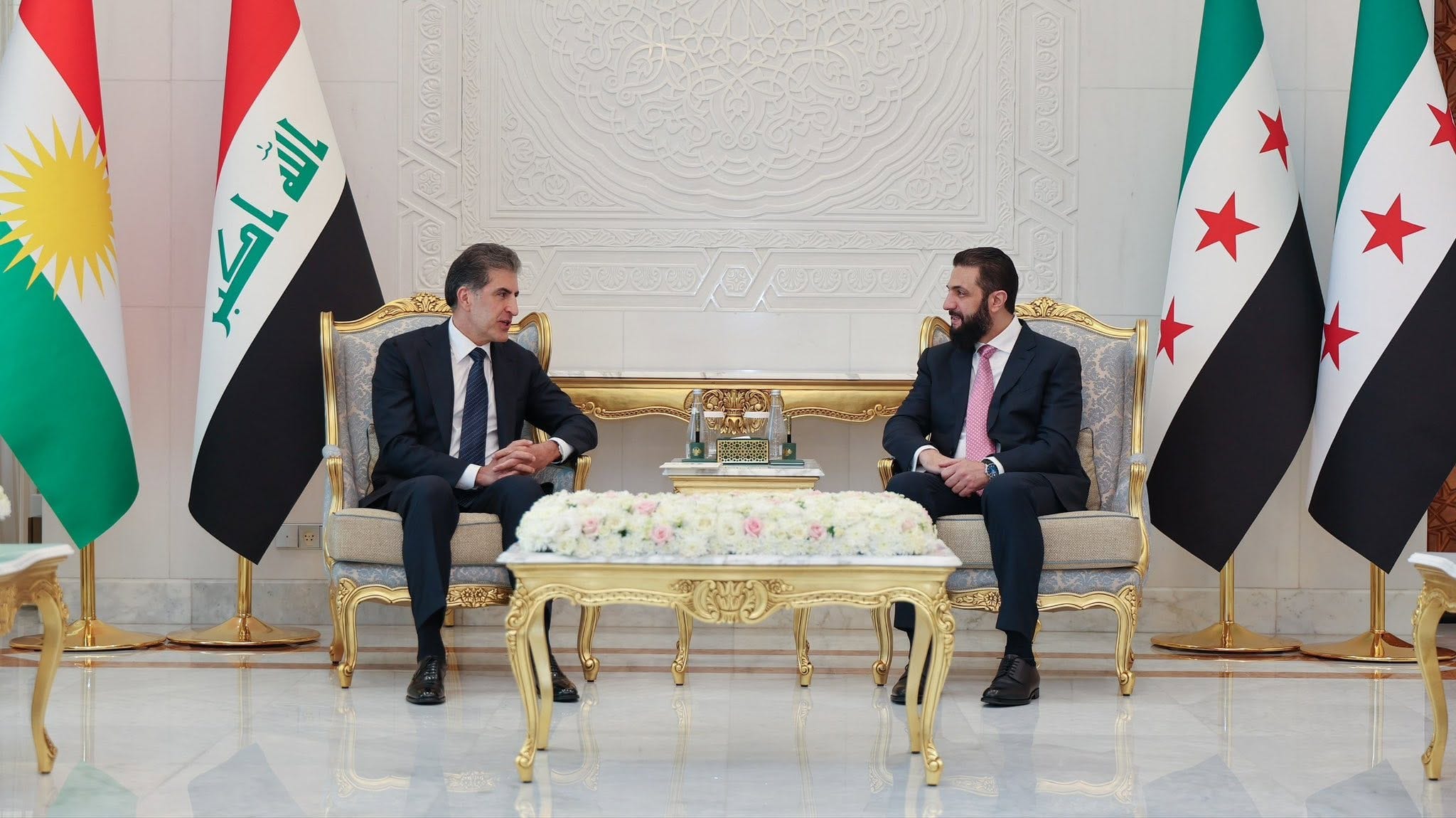
That is why Kurdistan Region President Nechirvan Barzani made his first visit to Damascus since Assad’s fall.
The talks focused on the future of the Kurdish-controlled areas in northeastern Syria and the possibility of integrating the SDF into the new Syrian state. Barzani is regarded as one of the few Kurdish leaders able to engage with Damascus, Baghdad, Ankara, and Washington, making him a potential bridge between Syria’s government and the Kurdish leadership.
If this process succeeds, Turkey could become one of its biggest beneficiaries.
For years, Ankara has argued that the YPG, the core force within the SDF, is closely linked to the PKK, an armed group that has fought against the Turkish state and operates mainly in Turkey and northern Iraq.
The SDF still maintains its own military structure and controls much of northeastern Syria. Turkey fears that as long as this arrangement continues, the region could remain a source of influence and logistical support for the PKK.
If the SDF is integrated into Syria’s military under President Ahmed al-Sharaa instead of remaining an independent armed force, the PKK would lose one of its most important sources of support and operational space along Turkey’s southern border.
For Damascus, resolving this issue through negotiation rather than another military campaign would represent a major step toward reunifying Syria and rebuilding a country exhausted by years of war.
Control Threat | Strategic Risk Analysis
#Syria #Turkey #Kurds #MiddleEast #Geopolitics