


Table of Contents
Washington Is Deliberately Extending the Transition
The United States Needs to Turn Its Current Advantage Into Durable Mechanisms
An Election Alone Is Not Enough to Create Democracy
Why Would a Multiparty Venezuela Benefit the United States?
Rodriguez Has Something Washington Needs Right Now
The Economy Needs to Stabilize Before Power Is Handed to a New Government
Machado Could Speed Up the Political Clock
Washington Is Also Taking a Gamble
The United States Is Preparing for Venezuela After Free Elections
1. Washington Is Deliberately Extending the Transition
Venezuela has come a long way since Nicolas Maduro lost power, yet Washington is still not pushing Caracas to hold an immediate presidential election. President Donald Trump has told interim President Delcy Rodriguez directly that Venezuela will eventually need elections. However, he did not demand a specific date. According to U.S. officials cited by Axios, the current plan has three steps: Change the composition of the Supreme Court, reform the electoral authority, and only then set an election date. Some officials in the Trump administration reportedly believe even 2027 may be too soon.
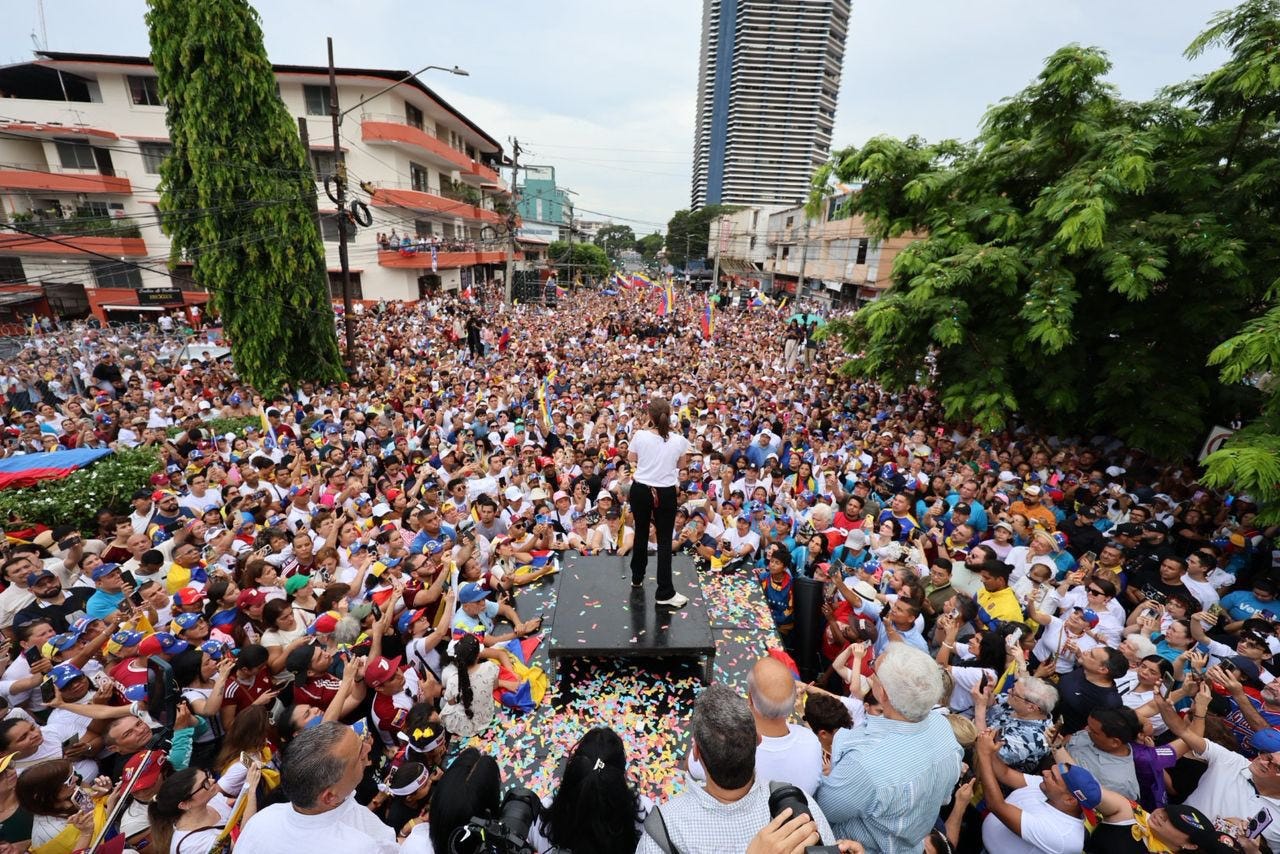
The White House has also publicly described the transition in a specific sequence: Stabilization, economic recovery, reconciliation, and finally democratic transition. The Trump administration has said a stable economy is a necessary condition for Venezuela to move toward elections. That sequence reflects how Washington currently views Venezuela. The United States has become too deeply involved to simply bring the country to election day and leave everything that follows to chance. A new government can emerge after one night of voting. A durable democratic political system takes much longer to build. Washington is using that time.
2. The United States Needs to Turn Its Current Advantage Into Durable Mechanisms
U.S. foreign policy has always been tied to national interests. Venezuela is no exception. Washington has already spent significant resources changing the balance of power in the country that holds the world’s largest proven oil reserves. Since Maduro lost power, the United States has rapidly expanded cooperation with the Rodriguez government in oil, mining, finance, debt restructuring and investment.
In September, the White House announced a major oil agreement granting U.S. interests management rights, economic benefits and long term purchasing rights across 17 oil fields. The White House publicly described the deal as part of a strategy to strengthen U.S. energy power, build U.S. led supply chains and replace previous Russian and Chinese influence. At the same time, the Rodriguez government has been negotiating with international financial institutions and the United States over Venezuela’s estimated $150 billion to $200 billion debt burden, as well as oil, gold, electricity projects and access to international capital. These things take time.
From Washington’s perspective, the period before elections gives the United States an opportunity to turn its current political influence into a structure of cooperation that is much harder to reverse: Long term contracts, investment, financial mechanisms, auditing systems, supply chains, corporate relationships and overlapping economic interests between the two countries. A new president can change policy, but a network of interests deeply embedded in the economy is far more difficult to unwind.
The United States also has to consider the possibility that a future elected Venezuelan government could take a different view of Washington. That government could review existing oil agreements, seek closer relations with China, rebuild deeper ties with Russia or simply reduce its dependence on the United States. Washington has every reason to prepare for that possibility now. The United States has already paid significant military, diplomatic and economic costs in Venezuela. Washington will want the post-Maduro order to produce lasting benefits for the United States rather than leave everything dependent on the outcome of another election a few years from now.
3. An Election Alone Is Not Enough to Create Democracy
Venezuela raises another question: What guarantees that the winner of the next election will continue to respect democracy? A weak democracy can legally elect a leader who later moves step by step to control the courts, electoral authorities, media, legislature and security forces. Authoritarian systems emerging from countries that once held elections are hardly unusual in modern history.
Venezuela also has several conditions that make the concentration of power easier: The state controls enormous natural resources, the administrative apparatus is powerful, the security forces have an important political role, and many institutions were weakened during the years of Chavez and Maduro. That is why Washington wants to change the institutions first.
Under the plan described by U.S. officials, the Supreme Court would be restructured to become more representative, opposition forces would participate in nominating judges, and the National Electoral Council would be reformed before an election date is announced. The logic is straightforward: The first election will only have lasting value if the winner cannot easily dismantle the system after entering the presidential palace. If Venezuela escapes Maduro only to hand almost all political power to another leader, it will simply have changed the name at the top. Washington needs more centers of power.
4. Why Would a Multiparty Venezuela Benefit the United States?
Democracy also has direct strategic value for the United States. Relations with an authoritarian government have one major weakness: An entire foreign policy relationship can depend on one person or one party. If that leader cooperates with Washington, the United States can reach agreements very quickly. When that leader turns against Washington, nearly the entire state can turn with him.
Venezuela under Hugo Chavez and Nicolas Maduro is a clear example. When the center of power in Caracas chose confrontation with Washington, the United States had virtually no influence inside Venezuela’s political apparatus, while Russia, China, Cuba and Iran expanded their room to operate.
A multiparty democracy creates a different structure. The president becomes only one part of the system. Congress, opposition parties, courts, local governments, businesses, the media and civil society become separate centers of power. If a future Venezuelan government wanted to reduce cooperation with the United States, Washington would still have other channels through which to maintain ties and protect its interests. A party that loses one election can also return in the next one with U.S. support.
That makes the relationship between the two countries less dependent on the attitude of a single individual. For the United States, this is a major practical advantage of a democratic Venezuela. Washington needs a system sufficiently decentralized that no future leader can easily pull the entire country back into an anti-U.S. orbit as Chavez once did. To achieve that, the institutions need to be in place before the competition for power reaches its decisive stage.
5. Rodriguez Has Something Washington Needs Right Now
There is another paradox in the transition. Delcy Rodriguez’s government still carries many characteristics of the old power structure. Rodriguez served as vice president under Maduro. Venezuela still does not have a new government created through a free presidential election after Maduro’s fall. Yet the very concentration of power inside the current system allows Rodriguez to implement major changes more quickly.
A normal democracy has countless points at which policy can be slowed or blocked: Congress, opposition parties, courts, interest groups, labor unions, companies, local governments and ultimately voters. A highly centralized government has fewer such obstacles.
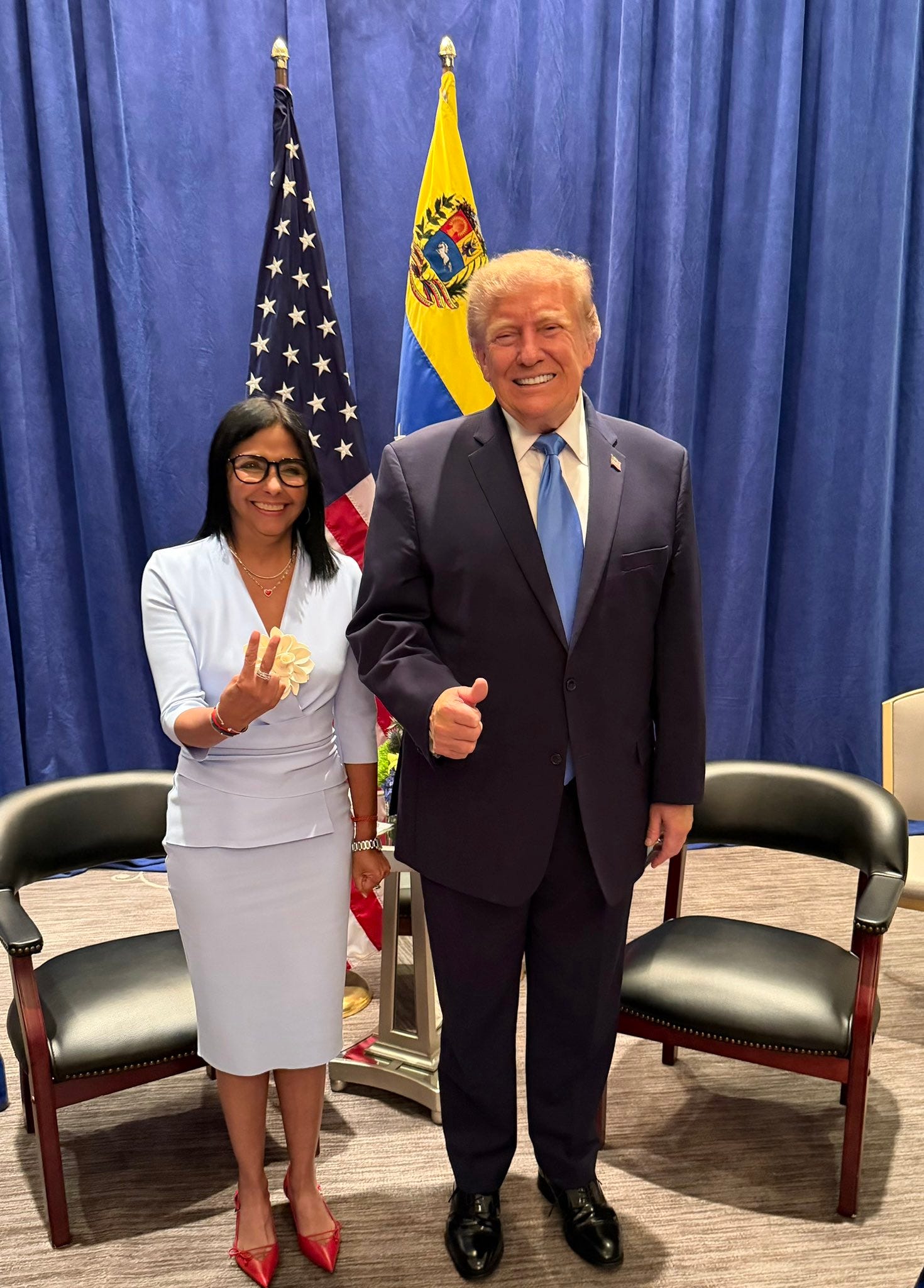
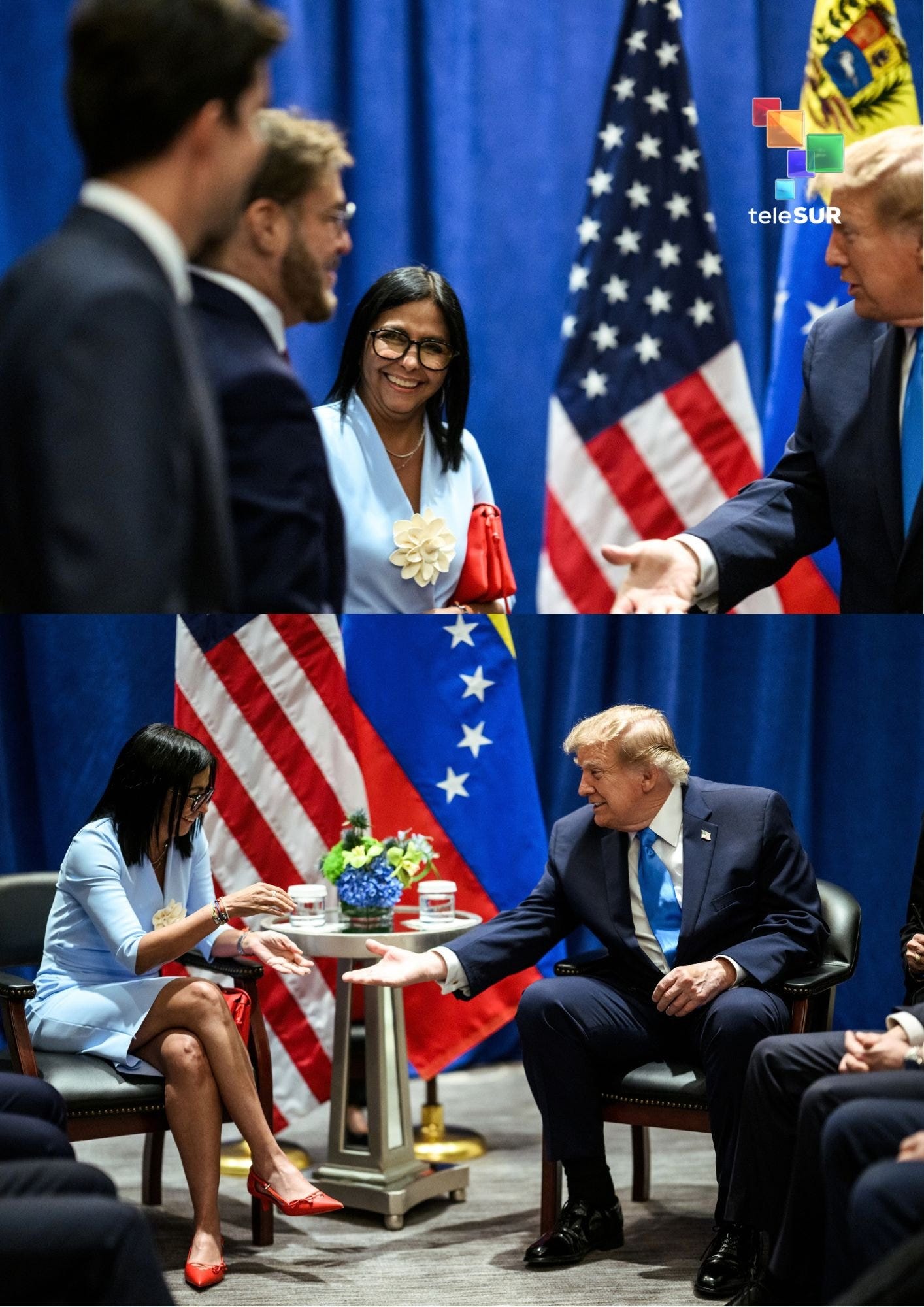
Washington currently needs Venezuela to restructure its debt, change the oil sector, attract investment, reform state institutions, restore relations with international financial institutions and prepare a new political system. Rodriguez can use the existing state apparatus to push those measures through more quickly. Trump has also established a direct working relationship with Rodriguez. Their September meeting in New York came as the two sides were significantly expanding economic and diplomatic cooperation. Reuters reported that Trump’s support for the interim government had increased in recent months.
At this stage, concentrated power can function as an instrument of transition. A newly elected democratic government would have to negotiate every major change with multiple political forces. It would also have to think about the next election. Painful but necessary economic measures could quickly become major political liabilities. Rodriguez has more concentrated authority to carry out measures that may be unpopular. Washington can use this period to complete the hardest parts of the restructuring before returning the political system fully to electoral competition.
The risks are also substantial. A transitional government with too much power can easily try to remain in power longer than originally intended. Time is therefore both an asset and a danger in the U.S. strategy if Washington does not use it carefully.
6. The Economy Needs to Stabilize Before Power Is Handed to a New Government
Washington is also concerned about the condition the first democratic government would inherit. Venezuela still faces a massive debt burden, a weak electrical system, an oil industry that requires huge investment, deteriorating infrastructure and an economy that has only recently emerged from years of crisis.
U.S. officials told Axios very directly that they do not want to hold elections only to leave a democratic government inheriting an “economic disaster” and facing major protests six months later over inflation and living conditions. They fear such a scenario could threaten the entire transition. That concern has a clear political basis.
People usually place enormous expectations on the government that emerges after a failed regime. They expect prices to fall, jobs to return, electricity to stabilize, public services to improve and everyday life to get better quickly. If those changes do not arrive, disappointment can spread just as fast. Former political forces can then return with a familiar message: Democracy has not improved your lives.
A new government weakened by economic failure can lose legitimacy before democratic institutions have had time to take root. Washington has invested too much in this process to accept the risk of a new democratic government collapsing simply because it took power too soon. The United States wants the next government to inherit a Venezuela where capital has begun to return, oil production is increasing, debt restructuring is underway and living conditions are stable enough for people to give the new democratic system time to prove itself.
7. Machado Could Speed Up the Political Clock
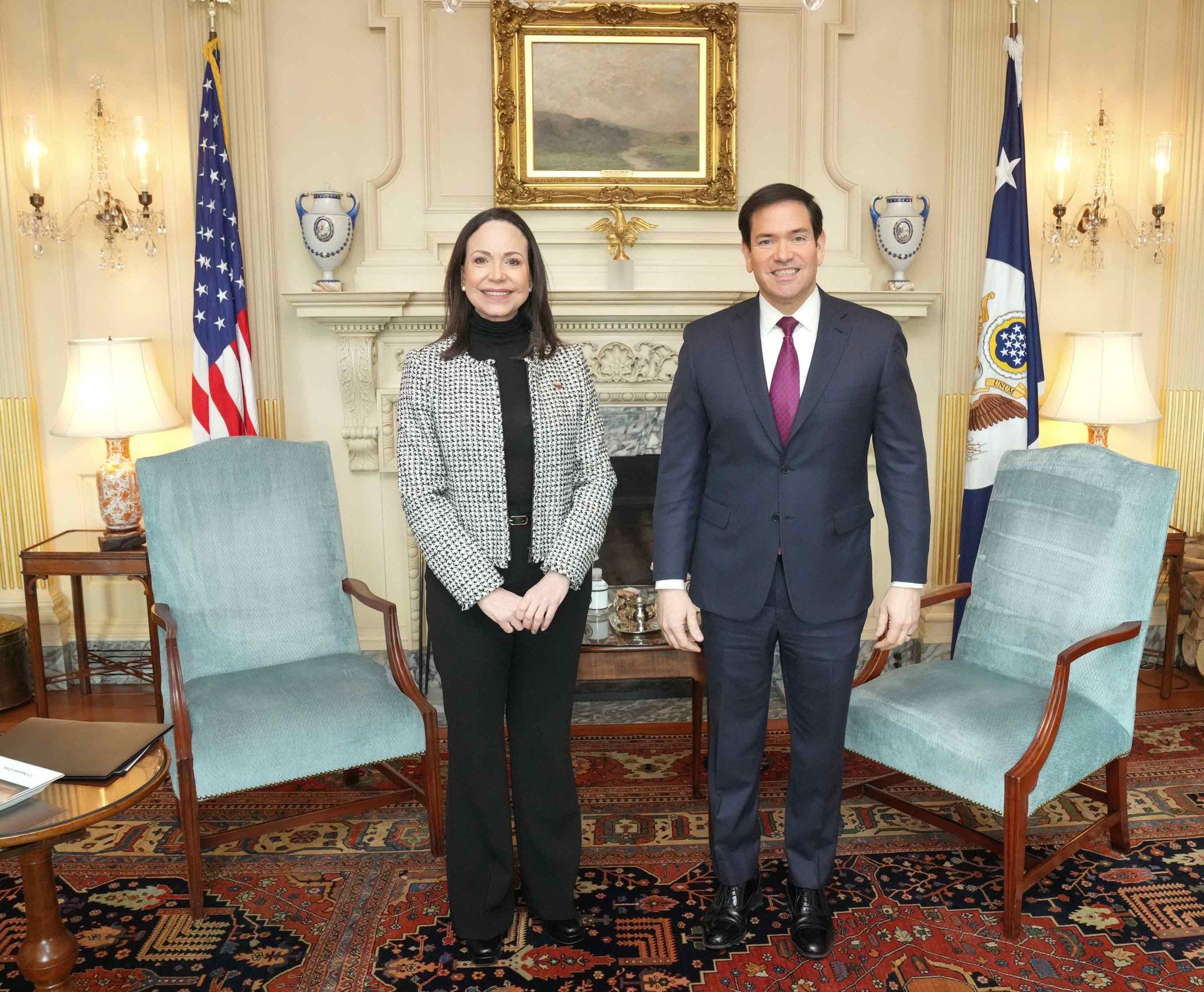
Maria Corina Machado has therefore become a particularly difficult figure in Washington’s calculations. She remains one of the most influential opposition figures in Venezuela. Reuters reported that Machado had the highest support among Venezuelan political figures in the surveys cited by the news agency in September.
Machado wants to return to Venezuela and push for free elections. She has also publicly questioned the durability of economic agreements signed during the transition, arguing that only a legitimate democratic government can provide long term stability for investors. Washington, however, has previously shown caution over the timing of her return. Reuters reported that U.S. officials asked Machado to delay her return because they feared her presence could disrupt the transition process backed by the United States. Machado’s movement is also not currently part of the main negotiating framework.
The reason is easy to understand when looking at the balance of power. Machado’s return would not simply mean an opposition leader stepping off a plane. She has the ability to mobilize crowds, increase pressure on the Rodriguez government and turn demands for early elections into a street movement. Once tens or hundreds of thousands of people begin demanding a specific election date, Washington will find it far more difficult to manage the process according to its own technical timetable.
A large movement could also push Venezuela toward a change of power through mass protests before the Supreme Court is reformed, the electoral authority is rebuilt, the economy is stabilized and the new mechanisms of cooperation with the United States have taken root. Machado has a political interest in acting early. Her strength comes from the support she has now, and political support can always change over time. Washington has an interest in extending the preparation period. Both sides want Venezuela to reach a competitive election, but their preferred timelines are not necessarily the same.
8. Washington Is Also Taking a Gamble
Extending the transition can bring significant benefits for the United States, but the risks increase the longer it continues. Rodriguez could build her own political base. Former members of the Maduro system could adapt to the new order and protect their own positions. Economic agreements with the United States could also be viewed by Venezuelans as deals signed before they had a chance to choose a new government. Machado has already used this argument by saying that only a genuinely democratic government can provide the long term legal stability investors need.
Washington also faces a problem of legitimacy. The United States played a decisive role in removing Maduro from power and has declared democracy to be the ultimate objective. If years pass without elections, more people will begin asking when the transition is supposed to end.
Even within the Trump administration, there is still no agreed timeline. Axios reported that some officials want elections in 2027 if conditions allow, while others believe the summer or fall of 2028 would be more realistic. One official acknowledged that the current situation cannot continue indefinitely.
Time helps Washington rebuild Venezuela. Time also helps those already in power strengthen their positions. The line between a transitional government and a government that wants to remain in office can become very blurred if there is no clear end date.
9. The United States Is Preparing for Venezuela After Free Elections
Washington now has an opportunity it has not had in decades: The chance to reshape its relationship with Venezuela almost from the ground up. The United States is using that opportunity across several areas at once.
The oil sector is being restructured with greater U.S. participation. Russian and Chinese companies are being pushed out of some strategic assets. The financial system is reconnecting with Western institutions. Venezuela’s enormous debt burden is beginning to be addressed. The courts and electoral authorities are being prepared for reform. Washington is also maintaining relations with several political groups rather than placing Venezuela’s entire future in the hands of one individual.
The publicly stated U.S. objective remains elections. But the timing of those elections will determine a great deal. If voting takes place immediately, the new government could inherit an old judicial system, an unfinished electoral structure, a weak economy and international economic relationships that are still being rebuilt. That government would face enormous pressure from its first day in office.
If Washington has another one or two years, the picture could look very different. Oil contracts could already be operating. U.S. companies could have committed capital. Debt restructuring could have a clear path. International financial institutions could have returned. The electoral authority could be reformed. The courts could include representatives of different political forces. Political parties would have time to reorganize. Living conditions could have improved.
Venezuelans would still choose their own president, but the next president would enter a system far more deeply structured than the Venezuela that existed immediately after Maduro lost power. That is the value of time for Washington.
Before Hugo Chavez, Venezuela spent roughly four decades under a multiparty democratic system centered largely around Accion Democratica and COPEI. During that period, Venezuela was also one of the United States’ most important political, economic and energy partners in Latin America, with close government ties, major U.S. corporate investment and an important role in supplying oil to the American market.
Chavez gradually dismantled that structure of relations. Venezuela moved closer to Cuba, Russia, China and Iran, while Washington’s political influence in Caracas steadily declined. The process continued under Nicolas Maduro.
For the United States, the opportunity now extends far beyond regaining access to an oil market. Washington has a chance to rebuild the position it once held in Venezuela before Chavez, but this time within a structure capable of surviving multiple governments. With an opportunity to reconstruct the entire relationship, Washington has little reason to rush into an election before the most important changes are firmly in place.
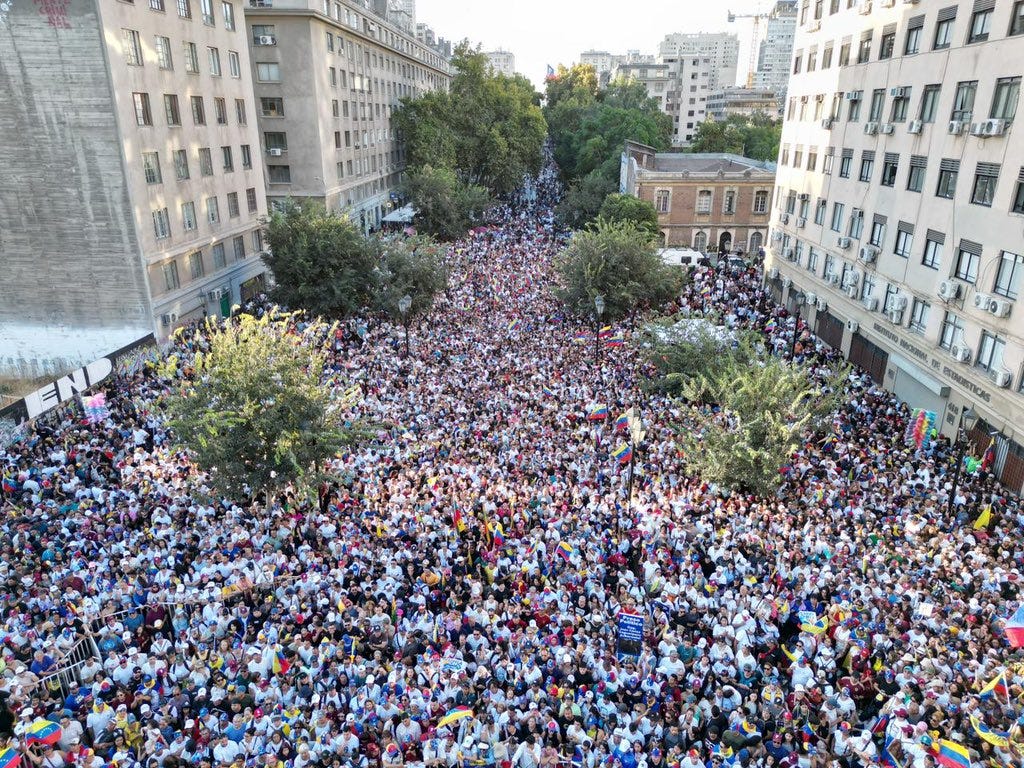
Machado therefore becomes a major variable. She has the ability to turn the demand for democracy into immediate political pressure, while Washington still needs more time to complete a much longer transition.
Venezuela’s future may revolve around three questions: How soon do Venezuelans want the right to choose a new government, how much time does Washington need to complete its preparations for the post-transition period, and will Machado accept that timetable or increase the pressure to the point of direct confrontation with the United States?