


What Is Happening to “Russia’s Version of NATO”?
Created in 2002 on the foundation of the 1992 Collective Security Treaty, the Collective Security Treaty Organization (CSTO) was designed as a Russian-led collective defense alliance and is often described as “Russia’s version of NATO.”
In recent years, however, the alliance has faced growing challenges.
The most controversial case is Armenia. During the 2021–2023 conflicts with Azerbaijan, Yerevan repeatedly called on the CSTO for assistance, but the alliance did not deploy military forces. Armenia later froze its CSTO membership in early 2024.
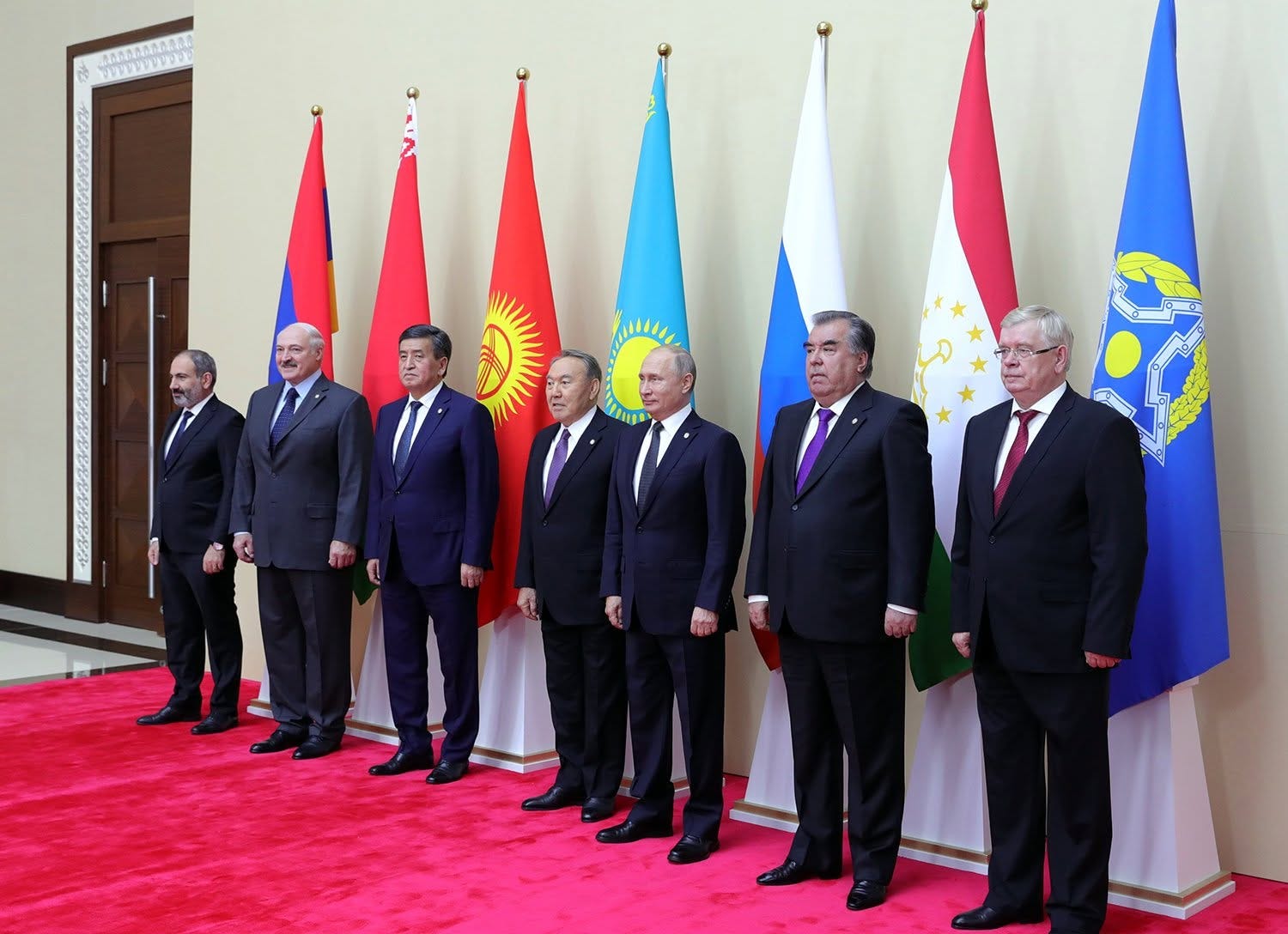
Another contradiction involves Kyrgyzstan and Tajikistan. Despite both being CSTO members, the two countries have repeatedly clashed along their shared border, with the alliance unable to resolve the conflict.
Azerbaijan, Georgia, and Uzbekistan all left the alliance at different times. Today, the CSTO has only six members. Russia and Belarus remain its closest allies. Armenia has frozen its membership. Kazakhstan is pursuing a more balanced foreign policy and reducing its dependence on Moscow, while Kyrgyzstan and Tajikistan continue to experience recurring border clashes.
The CSTO still exists as an organization, but when one member is left without the protection it expected, two others are fighting each other, and several countries have either left or distanced themselves from Moscow, the credibility of Russia’s military alliance inevitably comes into question.
#CSTO #Russia #Geopolitics #Putin
Control Threat | Strategic Risk Analysis