


Turkey Begins Acting Like a Power That Shapes Regional Order
Turkish President Erdogan has declared that no solution to the Cyprus issue will be accepted unless the sovereign equality and equal international status of the Turkish Cypriot people are recognized.
The message suggests Ankara no longer wants to prolong negotiations that have lasted for decades. With growing military power and strategic influence, Turkey is shifting from negotiation to demanding a decisive outcome in its favor.
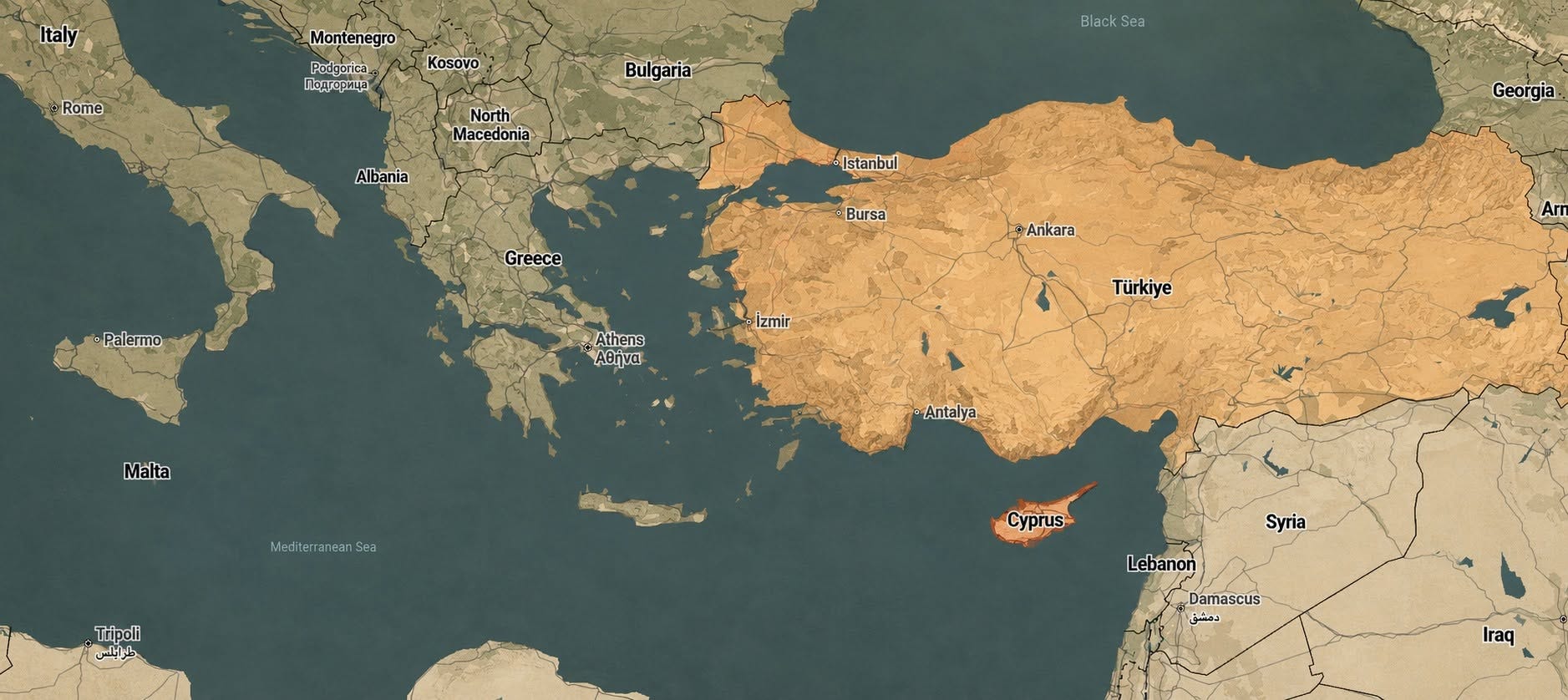
This position is rooted in history. Cyprus was part of the Ottoman Empire before coming under British control. After gaining independence in 1960, tensions between Greek Cypriots and Turkish Cypriots escalated. In 1974, following a coup aimed at uniting Cyprus with Greece, Turkey intervened under the 1960 Treaty of Guarantee. The island has remained divided ever since.
Cyprus occupies a strategic position in the Eastern Mediterranean, linked to key shipping routes, exclusive economic zones, and offshore natural gas fields. Maintaining influence there allows Turkey to protect its security interests and expand its regional influence.
Erdogan’s speech was therefore about more than Cyprus. It reflects a Turkey that is increasingly confident in its power and no longer hides its strategic ambitions. As the balance of power shifts, Ankara appears less willing to negotiate its core interests and more determined to shape the regional order on its own terms. Cyprus is simply one of the clearest examples of that shift.
#Turkey #Cyprus #EasternMediterranean #Geopolitics #Erdogan
Control Threat | Strategic Risk Analysis