


One answer about Scotland cannot bring about the breakup of the United Kingdom. But it may reveal a more serious problem for Andy Burnham: He has become British Prime Minister, but he has yet to show that he is capable of becoming the unifying center of the entire United Kingdom.
Burnham was once called the “King of the North,” a nickname he earned during his years as Mayor of Greater Manchester. His image as a northern politician willing to confront Westminster, particularly during disputes with the central government, helped Burnham build an appeal far beyond Manchester and ultimately carried him to 10 Downing Street.
But the skills that helped someone become the “King of the North” are not necessarily the skills required to lead the entire United Kingdom. What has happened around the issue of Scottish independence in September 2026 may be the first sign of that limitation.
If Burnham continues to let his opponents choose the battlefield, continues to react rather than lead, and fails to build a political narrative strong enough to bring England, Scotland, Wales and Northern Ireland together, he may not need to wait for the United Kingdom to break apart. His premiership may end first.
Table of Contents
From “King of the North” to British Prime Minister
The Remark That Put Burnham on the Defensive
How Did the SNP Exploit That Mistake?
How Should Burnham Have Responded?
The Problem Is Not the Law, but His Ability to Unite
Burnham May Always Be Only the “King of the North”
1. From “King of the North” to British Prime Minister
Andy Burnham became British Prime Minister on July 20, 2026, just over a month after returning to the House of Commons. Before that, he spent nine years as Mayor of Greater Manchester and built a distinctive position in British politics.
It was during this period that the media began calling Burnham the “King of the North.” The nickname evokes the famous title from the television series Game of Thrones, but in British politics it reflected Burnham’s image as a powerful representative of northern England standing up to the concentration of power in Westminster.
Burnham strengthened that image in particular when he confronted the central government during the pandemic. He was willing to publicly challenge London, speak for communities that felt neglected by Westminster, and build the image of a leader who stood up for his region.

That was a major political asset while he was in Manchester. But once Burnham entered Downing Street, his position was completely reversed. He was no longer the outsider demanding that the center of power listen. He had become the center of power.
Burnham also simultaneously serves as Minister for the Union, a position directly connected to the responsibility of ensuring that the government serves England, Scotland, Wales and Northern Ireland as a whole.
A “King of the North” can build power by representing one region. A British Prime Minister must do something much harder: Convince regions with different identities and interests to accept him as their representative.
And this may be Burnham’s weakness.
2. The Remark That Put Burnham on the Defensive
On September 9, 2026, SNP MP Chris Law challenged Burnham in the House of Commons over Scotland’s right to hold another independence referendum.
Northern Ireland has a legal mechanism that allows a referendum on leaving the United Kingdom and uniting with the Republic of Ireland if it appears likely that a majority of voters would support it. Scotland has no equivalent mechanism.
The question was cleverly framed. Chris Law asked Burnham whether the Scottish people had a similar right to determine their own future and whether the conditions for holding a second independence referendum should be written into law.
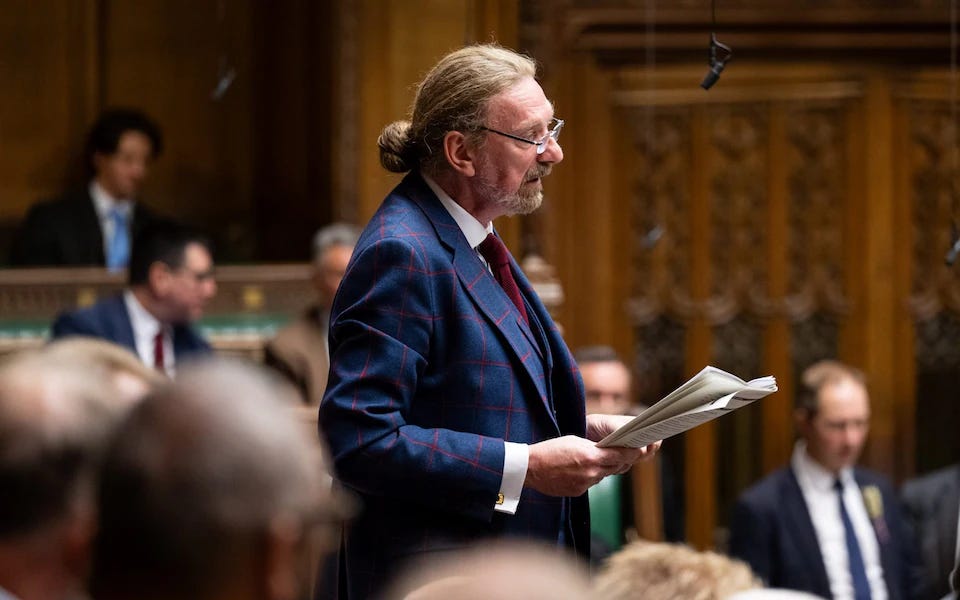
Burnham replied that he would adhere to the Good Friday Agreement 100 percent. After discussing the conditions for holding a referendum in Northern Ireland, he made the remark that the SNP immediately seized upon:
“I would say that it is exactly the same situation in Scotland.”
Burnham went on to say that he was not aware of majority public support in Scotland for another referendum and that, until that changed, there would not be another vote.
This answer gave Scotland no additional legal rights. Current law still does not allow the Scottish Parliament to unilaterally hold an independence referendum. Westminster still holds the power to decide.
But Burnham turned a question he could have rejected into a debate over what conditions would allow Scotland to vote.
That was the political mistake.
3. How Did the SNP Exploit That Mistake?
Scotland’s First Minister, John Swinney, did not let the opportunity pass. On September 10, 2026, just one day after Burnham’s remarks, the Scottish First Minister wrote to him and proposed that the two meet to turn the principle Burnham had just articulated into a “legal mechanism” for a referendum.
The SNP’s logic is easy to understand: If the British Prime Minister says Scotland is in “exactly the same situation” as Northern Ireland when public opinion shifts strongly enough, why should Scotland not have a similar legal mechanism?
Burnham then had to emphasize that Scotland and Northern Ireland have different histories and constitutional circumstances, while continuing to reject another independence referendum. But the need to clarify his position exposed the problem with his original answer.
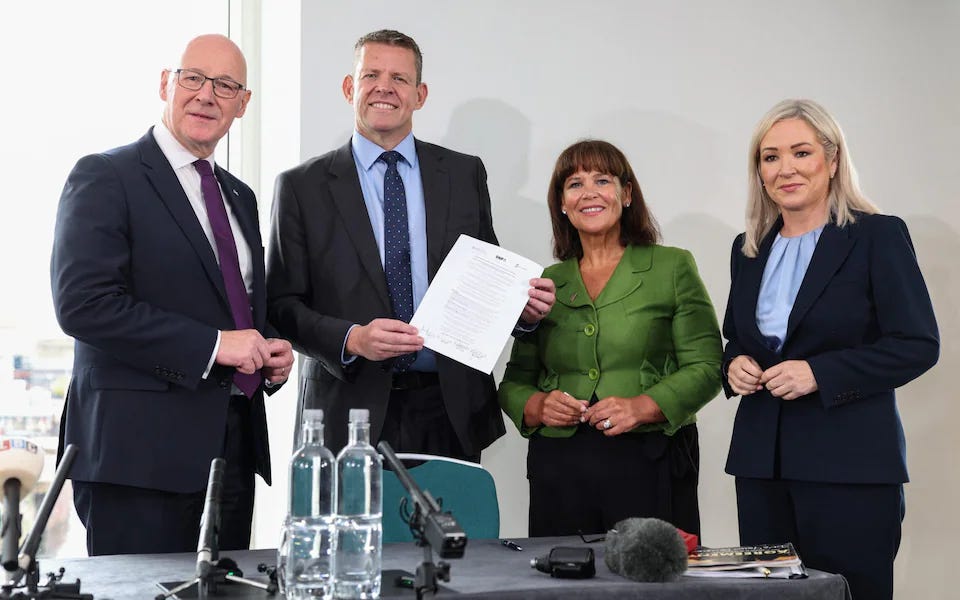
By September 14, 2026, the leaders of the SNP in Scotland, Plaid Cymru in Wales and Sinn Féin in Northern Ireland had met in Cardiff and signed a joint memorandum of understanding. They asserted the right to self-determination, called on Westminster to prepare for constitutional change, and declared that each nation would determine its future in its own way and in its own time.
This does not mean that the United Kingdom is about to break apart. Scotland and Wales still cannot unilaterally hold an independence referendum recognized by Westminster. Northern Ireland has its own separate legal framework. Support for separation also differs significantly among the three.
Burnham allowed one of his own answers to become part of the argument his opponents are using to pressure his government. For a prime minister who has been in office for less than two months, that is a more worrying sign than the Scottish referendum issue itself.
4. How Should Burnham Have Responded?
SNP MP Chris Law placed Burnham inside a framework that strongly favored the SNP: When will Scotland be allowed to vote to leave the United Kingdom?
Burnham did not have to accept that framework.
First: Northern Ireland has its own legal framework, and the government will respect it.
Second: Scotland has a different constitutional framework, and the 2014 referendum was held legally.
Third: He should then have immediately shifted to a positive argument: My government will demonstrate that Scotland is stronger, more prosperous and has a greater voice inside the United Kingdom.
That would have allowed Burnham to respect democracy, while giving the SNP no wording it could turn into a new demand, and at the same time place himself in the proper role of a prime minister defending and uniting the Union.
Burnham could then have shifted the focus away from the question of “when Scotland will be allowed to leave” toward the question a prime minister should be able to answer: Why should Scotland continue to stay?
He could have talked about the economic benefits, the common market, security, defense, public finances, infrastructure and international influence that the four nations gain from remaining together within the United Kingdom.
More importantly, he could have said that his government’s job is not to calculate the threshold at which Scotland might want to leave, but to govern the country well enough that Scots do not want to leave. That is the role of a leader capable of uniting a country. Burnham did not do that.
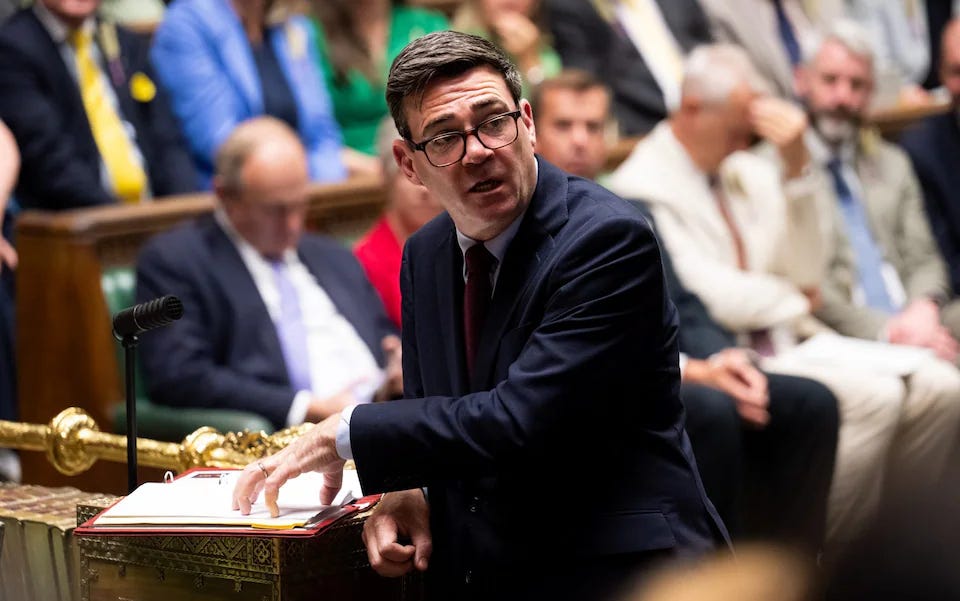
He stepped directly into the SNP’s question, discussed thresholds of public opinion and unintentionally confirmed that a sufficiently large shift in public opinion could change the situation. From there, his opponents only need to continue asking: If such a threshold exists, why not define it in law?
5. The Problem Is Not the Law, but His Ability to Unite
Westminster still holds an overwhelming legal advantage. Scotland cannot unilaterally organize a lawful independence referendum unless Westminster transfers the necessary power. Wales has no unilateral mechanism either.
Burnham therefore did not create a constitutional crisis with a single remark. But a prime minister cannot rely solely on the law to keep a multinational state united.
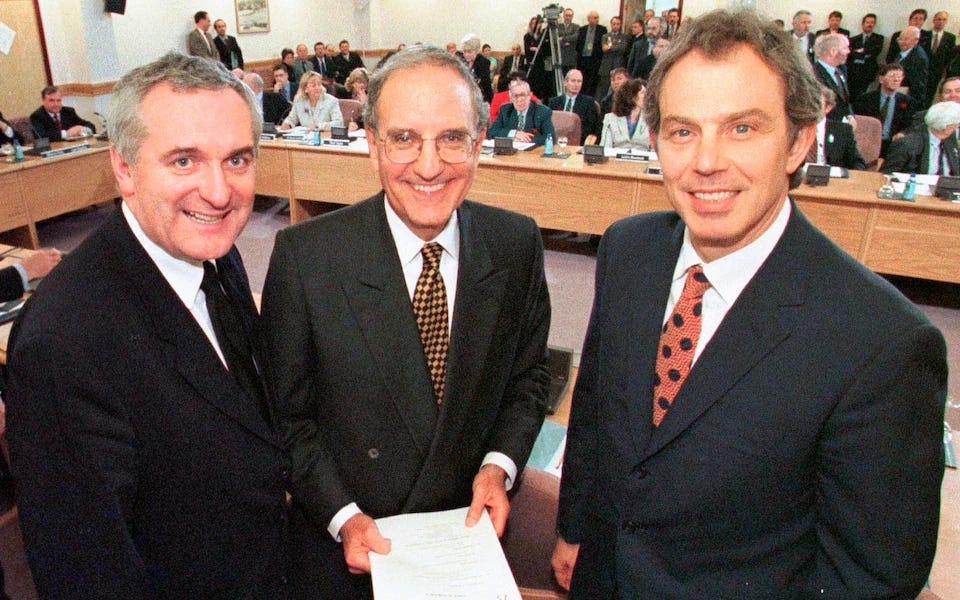
If London’s final answer to Scotland becomes simply, “You do not have the right to hold a referendum,” separatists will have an argument that is easy to sell to voters: Westminster is using legal power to prevent the Scottish people from deciding their own future.
A better way to counter that argument is to persuade enough Scots that they do not need another referendum. To do that, Burnham must become a prime minister who is seen as capable of representing the entire United Kingdom.
He needs people in Edinburgh, Cardiff and Belfast to feel that the central government is their government too, rather than a power in London that appears only to say “no.” This is a far more difficult test than winning power inside the Labour Party or winning an election.
6. Burnham May Always Be Only the “King of the North”
The nickname “King of the North” was once a compliment. It described an Andy Burnham with a clear political identity, an understanding of his voters, a willingness to confront Westminster and an ability to turn regional discontent into political power. That image helped make him one of the most prominent politicians in Britain and ultimately carried him into Downing Street.
But the office of Prime Minister requires a different kind of power. Burnham can no longer simply stand on one side and demand that Westminster change, because he is now Westminster. He no longer needs only to understand northern England. He must understand how to keep Scotland, Wales, Northern Ireland and England together within the same political structure. Nor can he simply represent those who are dissatisfied with the center of power, because he must now make them trust that center.
The Scottish issue shows that this transition may be harder than Burnham expected. A politician who once succeeded by exploiting the distance between the regions and Westminster must now be the person who closes that very distance. If he cannot do that, the qualities that once carried him to Downing Street may become the limits of his leadership once he is there.
Whether the United Kingdom will break apart is still far too difficult to predict. Whether Scotland will eventually hold another referendum also depends on many political variables in the years ahead. But Burnham’s political career does not need to wait for those questions to be answered.
A prime minister who loses the ability to unite will increasingly have to rely on law, party discipline and the formal powers of office to hold together what should instead be sustained by political support. When opponents repeatedly force him onto the defensive, when different parts of the country increasingly view Westminster as an adversary rather than a common center, and when doubts about his leadership begin to emerge inside the Labour Party itself, the future of his premiership will become a problem before the future of the Union does.
That is the central prediction here: Andy Burnham’s political collapse has begun, not because Scotland is about to become independent, but because he is revealing a dangerous limitation for a British Prime Minister: His ability to win power may be greater than his ability to unite once he has won it.
Andy Burnham has proved that he can become the “King of the North.” What he has not proved is whether he can become the leader of the entire United Kingdom. Burnham is capable of becoming the “King of the North,” but he may not be capable of holding on to the office of Prime Minister of the entire United Kingdom.