


Vietnam’s Greatest Enemy Is Not China. It Is Having No One Willing To Fight Alongside It.
For years, Vietnam has tried to position itself between the United States and China. No military alliance, no full alignment with either side, while maintaining relations with both. But the world is changing rapidly. War has already erupted in Europe. Conflict has spread across the Middle East. And Asia is increasingly becoming the main battleground in the strategic competition between Washington and Beijing.
The Russia-Ukraine war forced many smaller nations to confront a disturbing reality: countries that stand alone are far easier to intimidate. International law still matters, but when tensions escalate, what ultimately decides the outcome is still power, deterrence, and the network of allies standing behind you. In every confrontation, nations are always more cautious of a united bloc than of a country standing alone. That is why Russia still has not dared to directly attack a NATO member state.
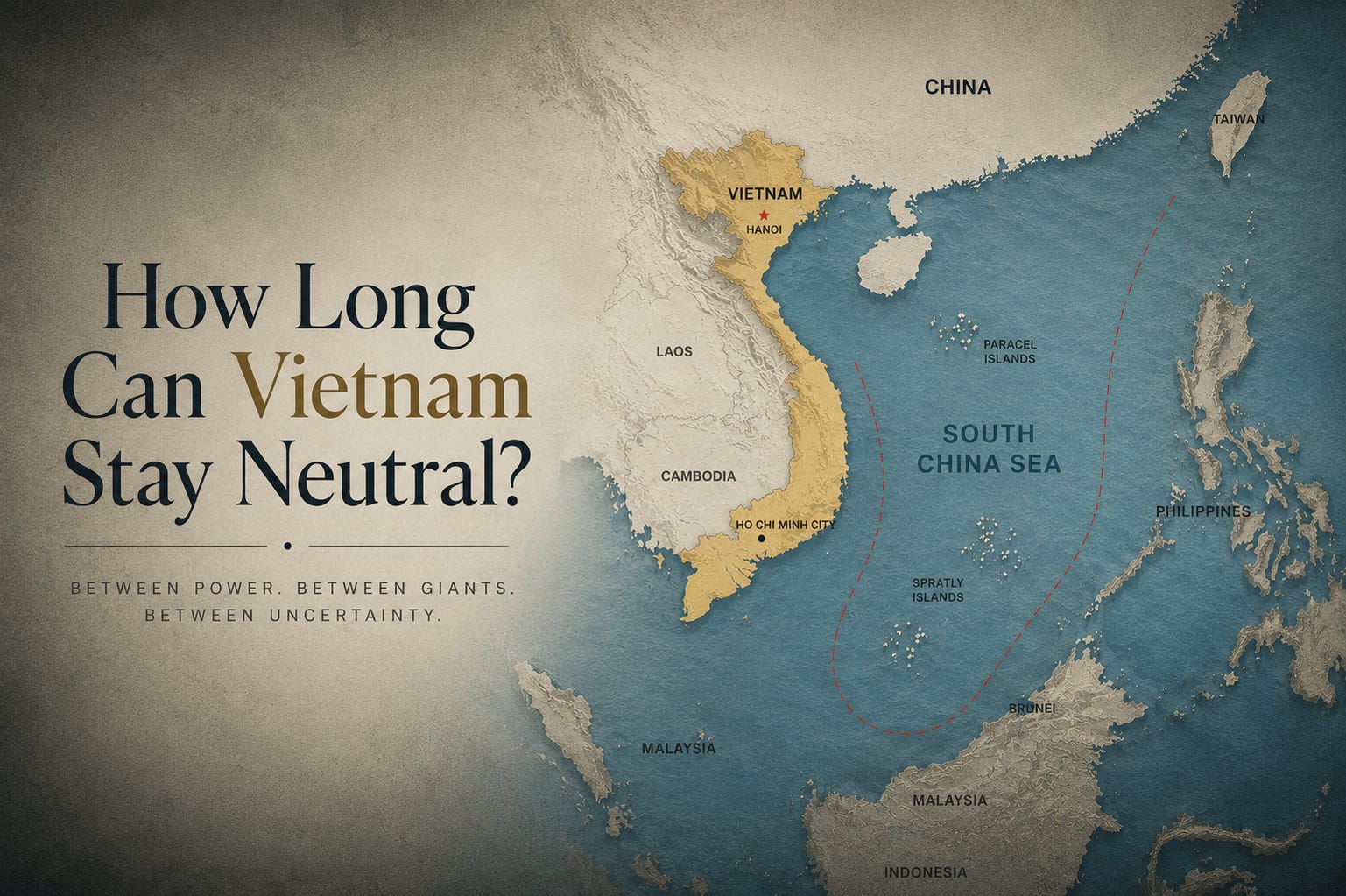
In international politics, the principle of “not threatening the use of force” is often not because the world has become more moral, but because countries like Vietnam do not yet possess enough military deterrence against major powers.
A country that is neither strong enough on its own nor backed by anyone willing to fight alongside it is in the most dangerous position of all. And that is becoming an increasingly serious question for Vietnam. In a world dividing into rival blocs more aggressively than ever before, how long can Vietnam continue to remain neutral?
The greatest risk facing Vietnam is not offending China or the United States.
It is realizing, only when real danger arrives, that no one is willing to come to its aid.