


The United Arab Emirates does not have a huge population, vast territory, or a military large enough to project influence in the same way as the United States, China, or Russia. The UAE has chosen a different path: Instead of trying to control entire countries, it focuses on points that can generate influence far beyond its own size, including ports, transport routes, logistics hubs, local authorities, indigenous armed forces, and areas adjacent to major maritime corridors.
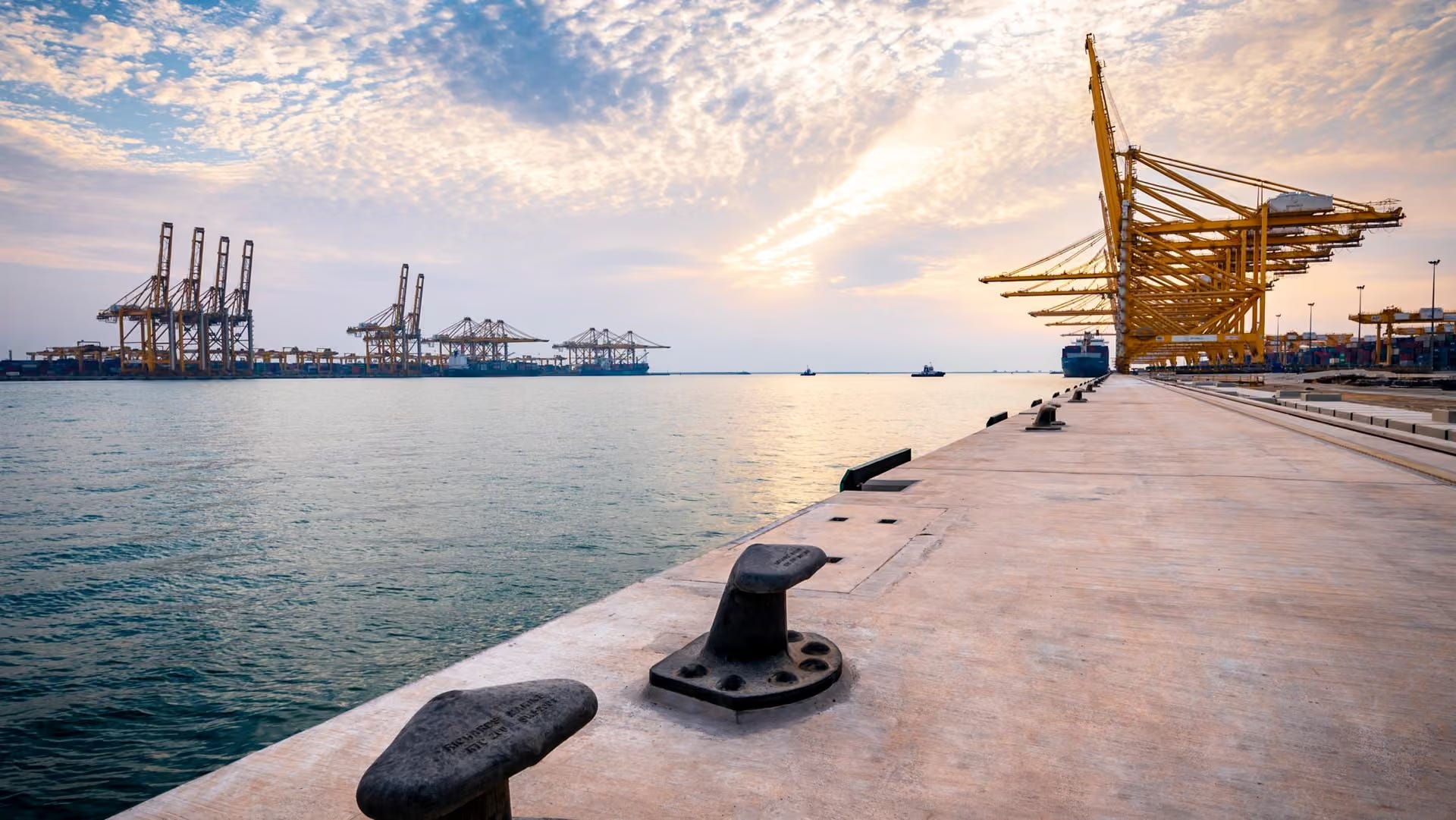
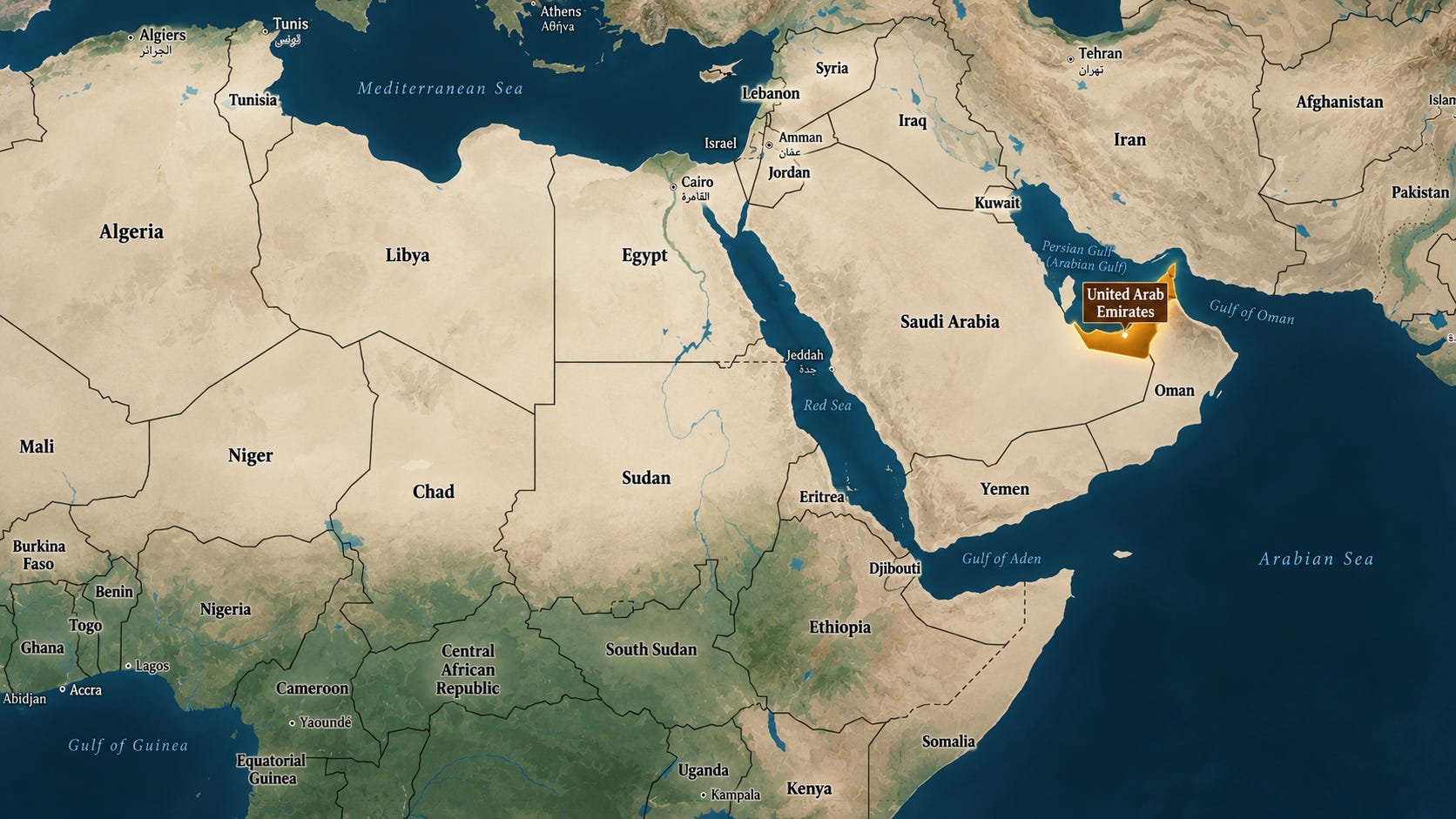
Taken individually, a port in Somaliland, an investment in Angola, or an allied force in Yemen may not appear to form a coherent strategy. But when these pieces are placed on the same map, a pattern begins to emerge: The UAE is building a network of power stretching from the Middle East into the Horn of Africa and beyond.
Contents
The UAE Does Not Need to Control Entire Countries
Ports Are the First Layer of the Network
The Horn of Africa Is Where the Pattern Becomes Clearest
Berbera: Where Commerce and Security Converge
Yemen: Withdrawing Troops Does Not Mean Withdrawing Influence
Sudan: The Network Enters More Contested Territory
Libya: A Pattern That Appeared Earlier
Why Do Ports and Local Forces Go Together?
What Does the UAE Actually Want?
A Different Kind of Power Is Emerging
1. The UAE Does Not Need to Control Entire Countries
Traditional great powers often build influence through military bases, security treaties, state aid, or direct deployments. The UAE is usually more flexible. A port can generate commercial benefits, an economic zone can attract capital, a logistics company can build long-term relationships with governments, while a training program can establish ties with local security forces.
A friendly local force can also protect UAE interests without requiring thousands of Emirati troops to remain permanently deployed. This does not mean every UAE investment is a geopolitical project. Most ports, logistics facilities, and transport operations still have to generate commercial returns, but for a country as deeply dependent on international trade as the UAE, commercial and strategic interests can often converge in the same location.
This is essential to understanding how the UAE expands its influence: It does not necessarily seek to own territory, but rather to become difficult to separate from the infrastructure, commerce, and balance of power in strategically important regions.
2. Ports Are the First Layer of the Network
The UAE possesses two particularly large logistics networks. DP World is ultimately owned by the Government of Dubai and operates a network of ports, container terminals, and logistics hubs across multiple continents. In Abu Dhabi, AD Ports Group forms a second network, with operations stretching from the Middle East into Africa and other regions.
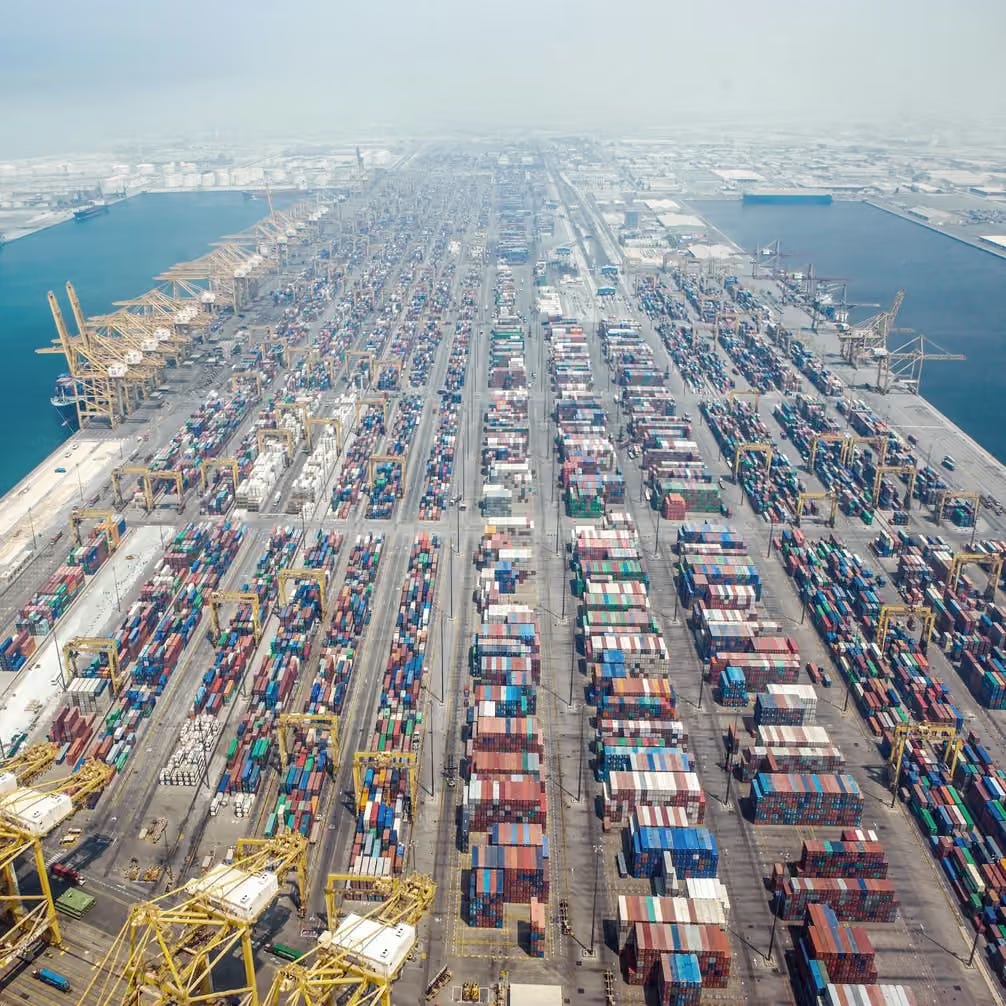
In recent years, UAE companies have continued expanding their presence at ports including Luanda in Angola, Pointe-Noire in the Republic of the Congo, Douala in Cameroon, Aqaba in Jordan, and Latakia in Syria. These are primarily commercial projects, but a 20- or 30-year port operating agreement has very different implications from simply selling goods to a country or making a short-term financial investment.
When a UAE company manages a major commercial gateway for decades, the UAE becomes part of the infrastructure that the local economy uses every day. This creates long-term relationships with governments, businesses, economic elites, and national logistics systems. Ports therefore do more than move goods. They create relationships that can endure across multiple political administrations.
3. The Horn of Africa Is Where the Pattern Becomes Clearest
Nowhere is the intersection of UAE commercial, political, and security interests clearer than in the Horn of Africa. The region lies immediately south of Bab al-Mandab, the strait connecting the Red Sea with the Gulf of Aden and then the Indian Ocean. It is one of the most important maritime corridors linking Asia, the Middle East, and Europe.
The UAE has built deep relationships with Somaliland and Puntland, two entities with complicated relations with Somalia’s federal government. In Somaliland, DP World manages and develops the Port of Berbera while also developing the surrounding economic zone and logistics infrastructure. Farther east, a company within the DP World system has also participated in developing the Port of Bosaso in Puntland.
These projects create a chain of presence along the Gulf of Aden, directly across from Yemen. Viewed individually, each port could simply be considered part of a normal logistics expansion strategy. But when placed alongside Bab al-Mandab, Yemen, and the Red Sea, the strategic value of this network becomes much clearer.
4. Berbera: Where Commerce and Security Converge
Berbera is perhaps the clearest example of how a commercial location can simultaneously carry strategic value. Somaliland previously allowed the UAE to develop a military facility in Berbera and use airport infrastructure there. The relationship between the UAE and Somaliland has therefore extended beyond port operations and economic zone development.
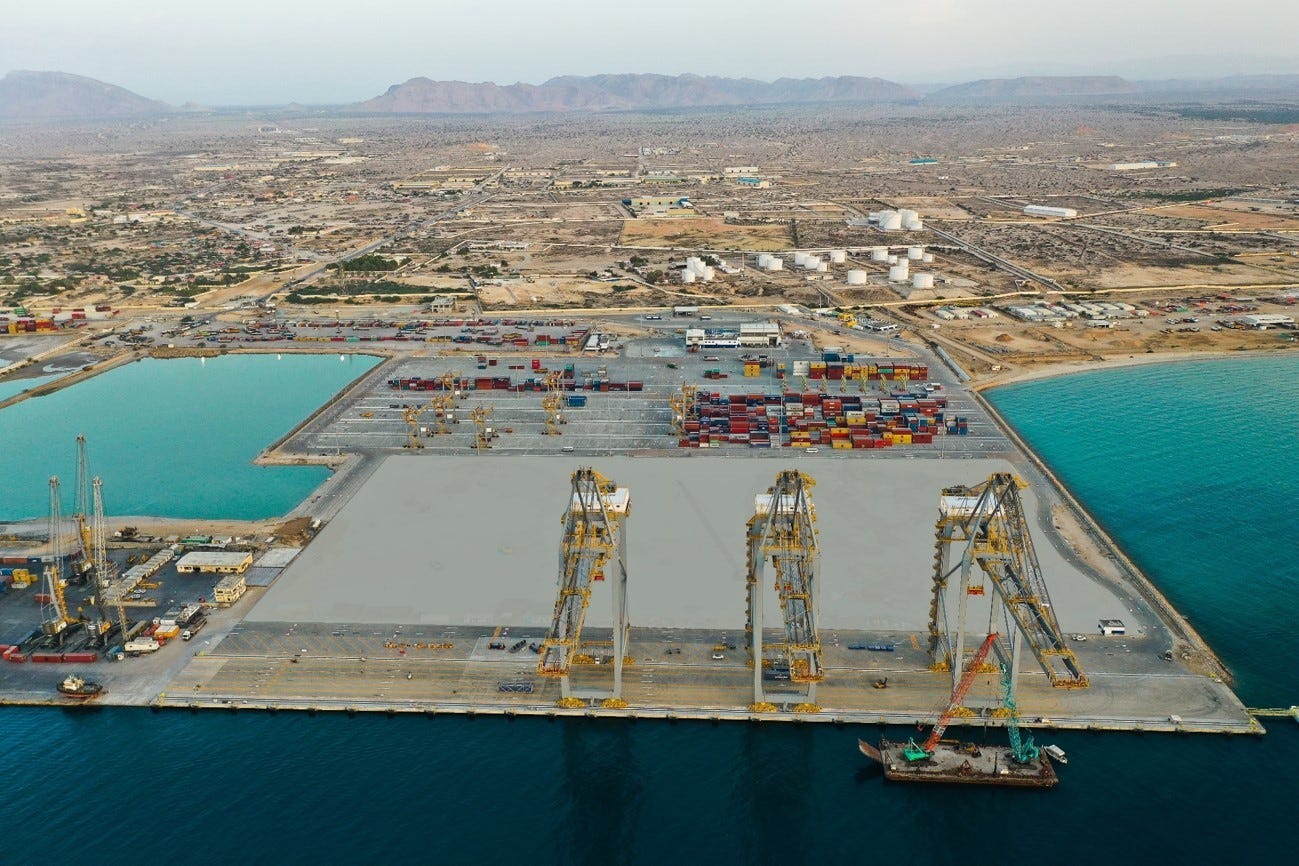
At the same location, the UAE has ties with the Somaliland authorities, a Dubai-owned company operates the port, Emirati entities invest in logistics infrastructure, and security relations have existed for years. When commerce, diplomacy, and security overlap at the same point, UAE influence becomes considerably more durable. If one area of the relationship encounters problems, other ties can still help sustain the presence of Abu Dhabi and Dubai in the region.
5. Yemen: Withdrawing Troops Does Not Mean Withdrawing Influence
Yemen illustrates a different approach. The UAE joined the Saudi-led coalition in 2015 and at one point deployed substantial forces on the ground. Abu Dhabi later withdrew most of its direct military presence, but Emirati influence did not disappear with the troops.
The UAE built deep ties with the Southern Transitional Council, or STC, a force seeking to restore an independent state in southern Yemen. Abu Dhabi has also maintained relationships with other forces along the Red Sea and the Gulf of Aden. This has allowed the UAE to retain influence in strategically important areas even after reducing its direct military presence.
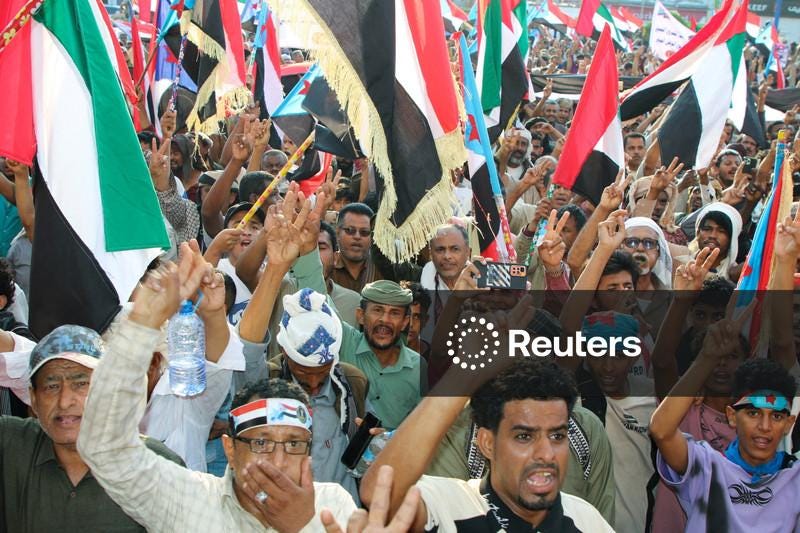
Southern Yemen is particularly important because it surrounds the Gulf of Aden and provides access to Bab al-Mandab. From this perspective, the logic is straightforward: A country does not necessarily need to deploy its own military to control territory directly if local forces already share some of its political and security interests.
But this model also carries risks. Local forces are not tools that can be completely controlled from abroad. They have their own objectives and ambitions and may act in ways that create friction with other UAE partners. Yemen shows that power exercised through local partners can generate substantial influence, but it does not amount to absolute control.
6. Sudan: The Network Enters More Contested Territory
Sudan is a far more sensitive case. The Sudanese government has repeatedly accused the UAE of supporting the Rapid Support Forces, or RSF, in its war against the Sudanese Armed Forces, which began in 2023. The UAE denies supplying weapons to the RSF and says its role has focused on humanitarian assistance and promoting a diplomatic solution.
International investigations and United Nations reports have examined numerous allegations involving logistics routes through Chad and neighboring countries. Because Abu Dhabi denies providing direct military support to the RSF, these claims must be clearly distinguished between allegations, investigative findings, and facts acknowledged by the parties themselves.
Sudan nevertheless illustrates a broader issue. When a country has built logistics, financial, aviation, and political networks stretching from the Gulf into the Horn of Africa and North Africa, those networks are not valuable only in peacetime. Once war begins, the same commercial corridors and cross-border relationships can become important factors in the balance of power.
7. Libya: A Pattern That Appeared Earlier
Sudan is not the first conflict in which the UAE has appeared alongside outside powers backing competing local forces. During Libya’s civil war, the UAE, Egypt, and several other partners supported Khalifa Haftar’s forces in the east, while Turkey backed the authorities in Tripoli.
Libya, Sudan, and Yemen are not identical conflicts. The UAE’s partners are different, local objectives differ, and the level of intervention has varied. Yet one recurring feature remains: Abu Dhabi often builds direct relationships with forces capable of controlling territory, transport routes, or strategically important areas rather than placing all of its influence in the hands of central governments.
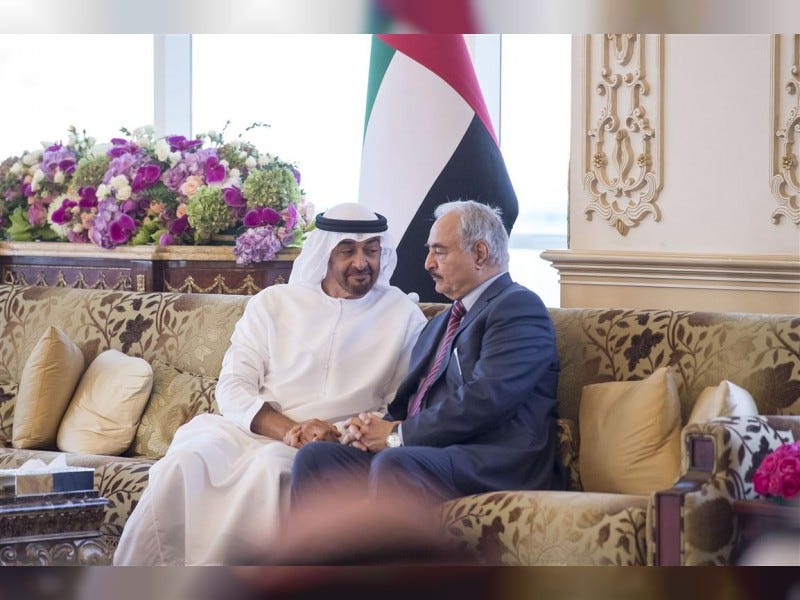
This is particularly useful in divided countries or states where the central government does not fully control the national territory. An agreement with the government in the capital may not provide actual access to a port, airport, or road controlled by another force. Relationships with local actors allow the UAE to operate in fragmented political environments.
8. Why Do Ports and Local Forces Go Together?
At first glance, these two tools appear almost unrelated. One involves containers, cranes, warehouses, and logistics contracts. The other involves security forces, political organizations, and local armed groups. Strategically, however, they solve two different problems.
Ports create durability. A contract lasting several decades requires businesses, governments, and economic systems on both sides to continue working together across multiple political administrations. Local forces, meanwhile, provide access and help protect influence in environments where central governments do not fully control their territory.
When these two elements appear together, a form of networked power begins to emerge. The UAE does not necessarily have to govern a territory if it has access to its ports, relationships with local authorities, economic interests on the ground, and security partners strong enough to protect those interests.
9. What Does the UAE Actually Want?
No single motive explains every UAE activity. The first remains trade. The UAE has built its economy around aviation, shipping, ports, finance, and logistics. Participating in the operation of multiple points along global supply chains generates profits for Emirati companies while strengthening Dubai and Abu Dhabi as international commercial hubs.
The second interest is maritime security. Yemen, Somaliland, Puntland, and the ports around the Red Sea lie close to routes on which UAE trade directly depends. A conflict at Bab al-Mandab, in the Red Sea, or at the Strait of Hormuz can quickly become an economic problem for the UAE.
The third interest is political. For years, the UAE has opposed movements associated with the Muslim Brotherhood and has built relationships with governments and forces that share similar views. This has influenced Abu Dhabi’s policies in Yemen, Libya, and elsewhere.
Finally, there is international status. A small country can become difficult to ignore if the ports, investments, trade networks, and security relationships of many other states are partly connected to it. Simply by controlling or participating in ports, trade routes, investment networks, and security relationships across multiple regions, the UAE has been able to generate influence far greater than its physical size would suggest.
10. A Different Kind of Power Is Emerging
It would be a mistake to assess the UAE simply by counting the number of soldiers, aircraft, or military bases it possesses. Much of Emirati influence does not sit in one place. It is distributed across a network: A port in Somaliland, a logistics contract in Africa, an economic zone, a transport corridor, relationships with local authorities, a force trained in Yemen, or a political partner in Libya.
Not all of these links were created for the same purpose. Nor should every commercial activity undertaken by DP World or AD Ports be treated as an instrument of UAE foreign policy. But when enough commercial, political, and security interests converge in strategically important locations, their combined effect creates power greater than any individual project.
This may be the most accurate way to understand the UAE’s rise. Abu Dhabi is not trying to build a territorial empire, nor does it possess the capacity to project military power on the scale of the world’s largest powers. Instead, the UAE is building a system of access points and long-term relationships in places where international commerce, politics, and security intersect. The UAE does not need to control the entire map. It only needs to be present at enough of the important points on it.