


Armenia Continues Its Shift Toward the West
After the newly elected parliament convened for its first session, Armenia’s government resigned in accordance with the Constitution. However, this is merely a constitutional procedure. Prime Minister Nikol Pashinyan and his cabinet will continue serving in a caretaker capacity until a new government is formed.
Pashinyan’s Civil Contract party won the June 2026 parliamentary election, making it almost certain that he will remain prime minister.
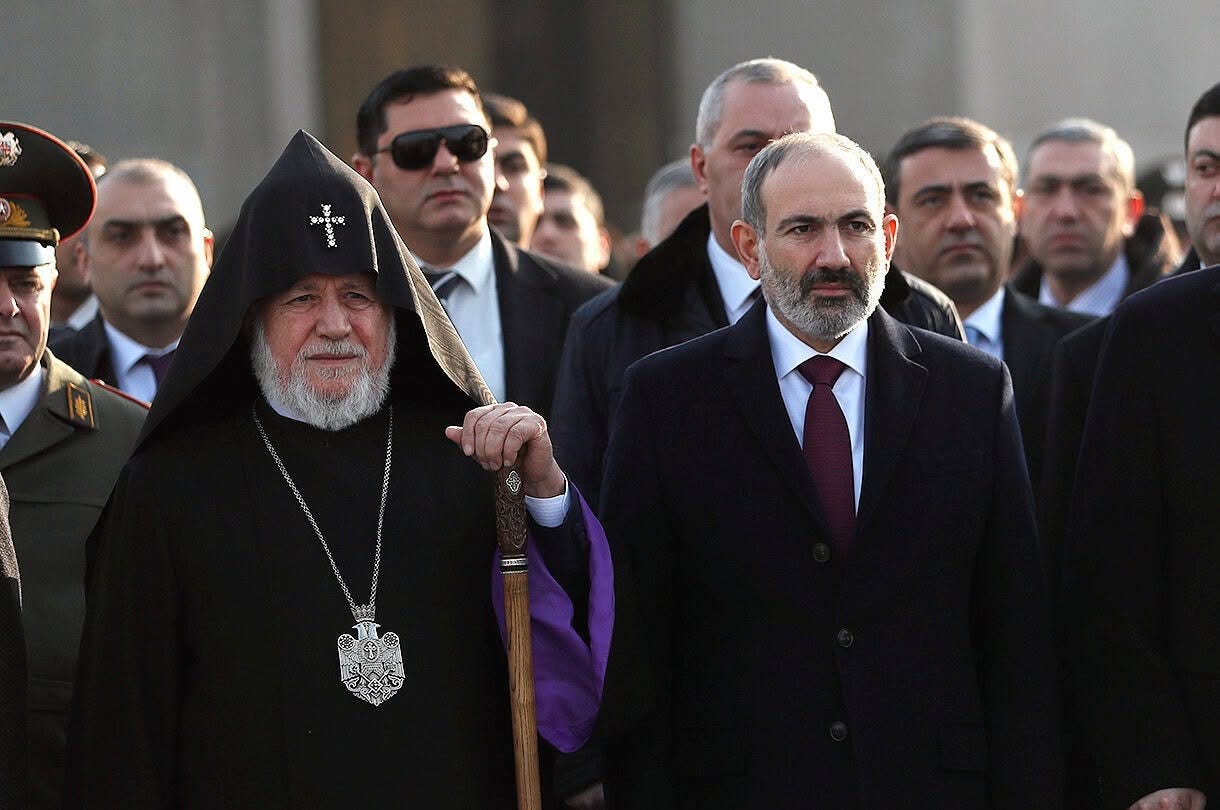
Meanwhile, tensions between the government and the Armenian Apostolic Church continue to escalate. As Armenia’s oldest and most influential religious institution, the Church is deeply intertwined with the country’s national identity and political life. For the first time in modern Armenian history, Catholicos Karekin II was not invited to attend the opening session of parliament, highlighting that the confrontation between the government and the Church remains far from over.
Pashinyan’s continued leadership also means Armenia is likely to keep reducing its dependence on Russia while expanding ties with the West. Following its defeat in Nagorno-Karabakh, Yerevan has strengthened cooperation with the European Union, the United States, and France, while gradually reducing Russia’s role in its security affairs. However, this transition will not be easy. Armenia remains heavily dependent on Russia in areas such as the economy, energy, and infrastructure, and it must continue balancing its ambition to integrate more closely with the West against the geopolitical realities of the South Caucasus.
#Armenia #Pashinyan #Politics
Control Threat | Strategic Risk Analysis